

Capicola is a dry‑cured, spiced pork neck or shoulder, thinly sliced for charcuterie.
I’ve worked around cured meats for years, tasting dozens of regional styles and talking with small producers. This guide explains what capicola is, how it’s made, why it tastes the way it does, and how to buy, store, and enjoy it. Read on to learn history, production steps, flavor notes, serving ideas, nutrition facts, and real-world tips from someone who’s handled capicola in deli counters and home kitchens.
What is capicola?
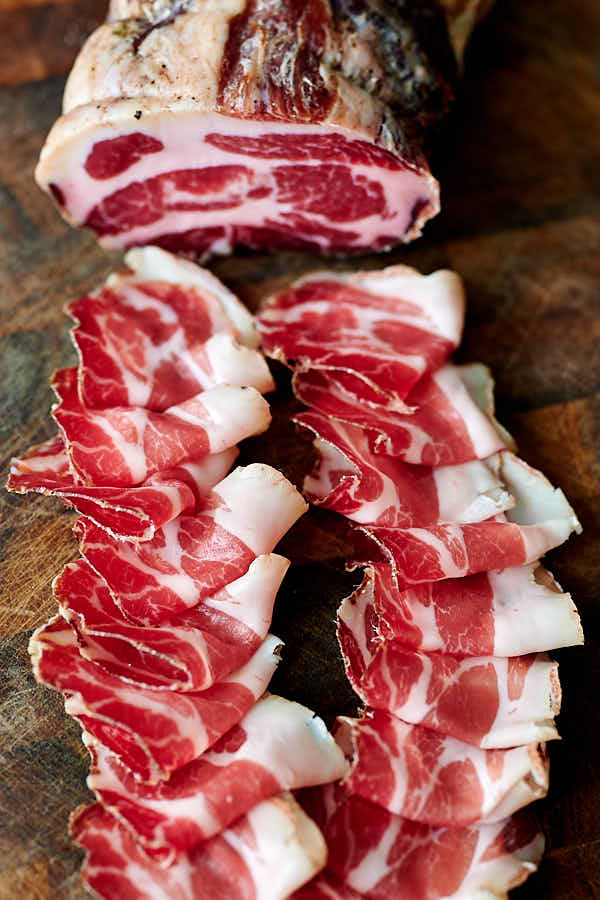
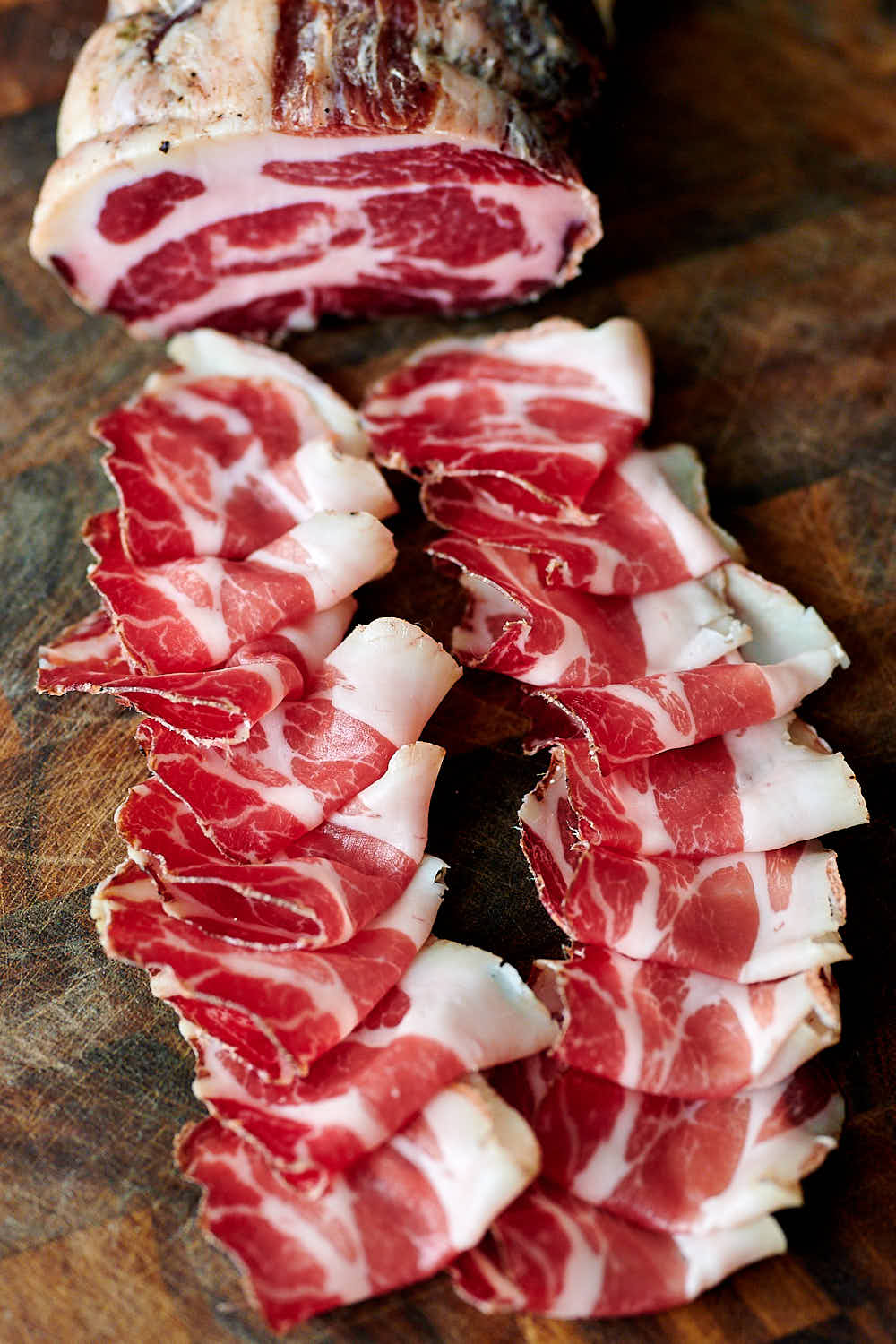
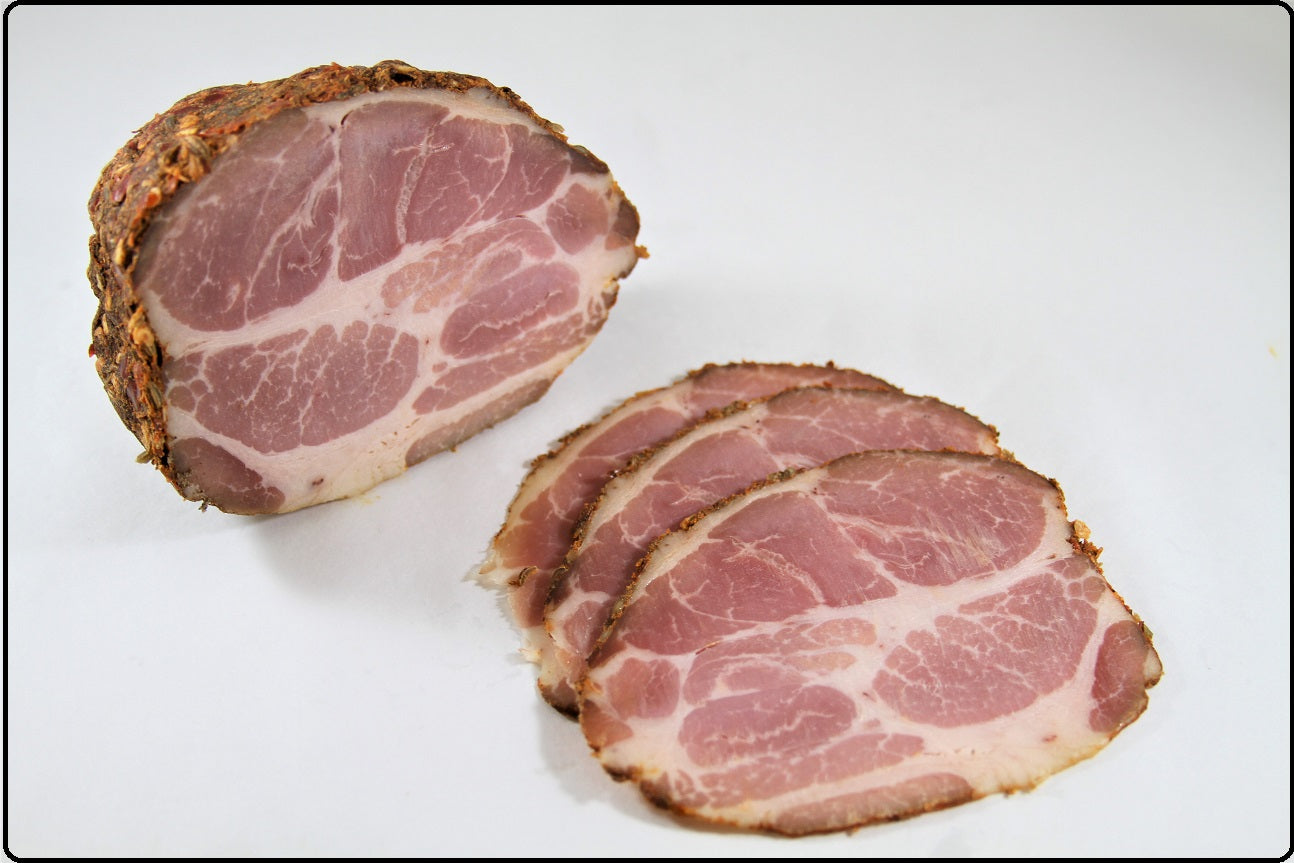
Capicola (also spelled capocollo or coppa) is a traditional Italian cured meat made from the pork neck or shoulder. It is dry‑cured, salted, seasoned, and aged until it develops a firm texture and a rich, savory flavor. Thin slices show marbling of fat and meat and are prized on charcuterie boards and sandwiches.
Capicola differs from prosciutto and pancetta because it uses a different cut and a distinct spice mix. Regional names and small recipe changes create many styles of capicola across Italy and in Italian‑American communities.
History and origins
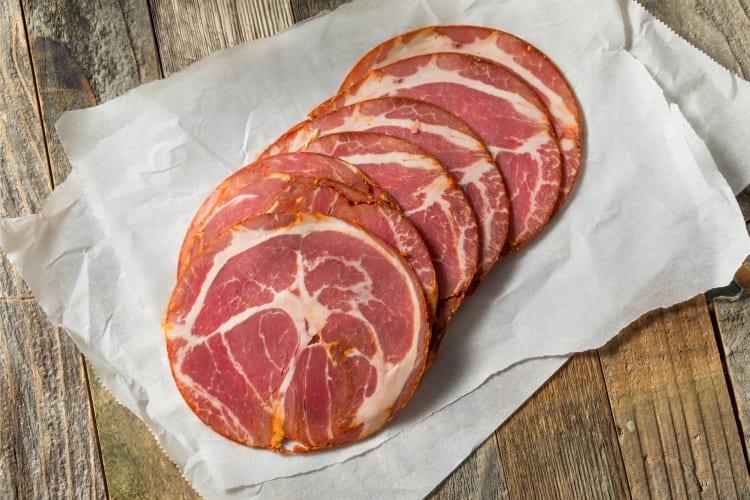
Capicola traces back centuries to Italian curing traditions. Rural communities cured pork to preserve meat through winter. The neck and shoulder were valued for their marbling and flavor, which made them ideal for a dry cure.
Immigrants brought their recipes to the United States and adapted them. That led to dialect names and regional American takes on capicola. Over time, artisan producers refined methods and added local spices, creating the variety we enjoy today.
How capicola is made
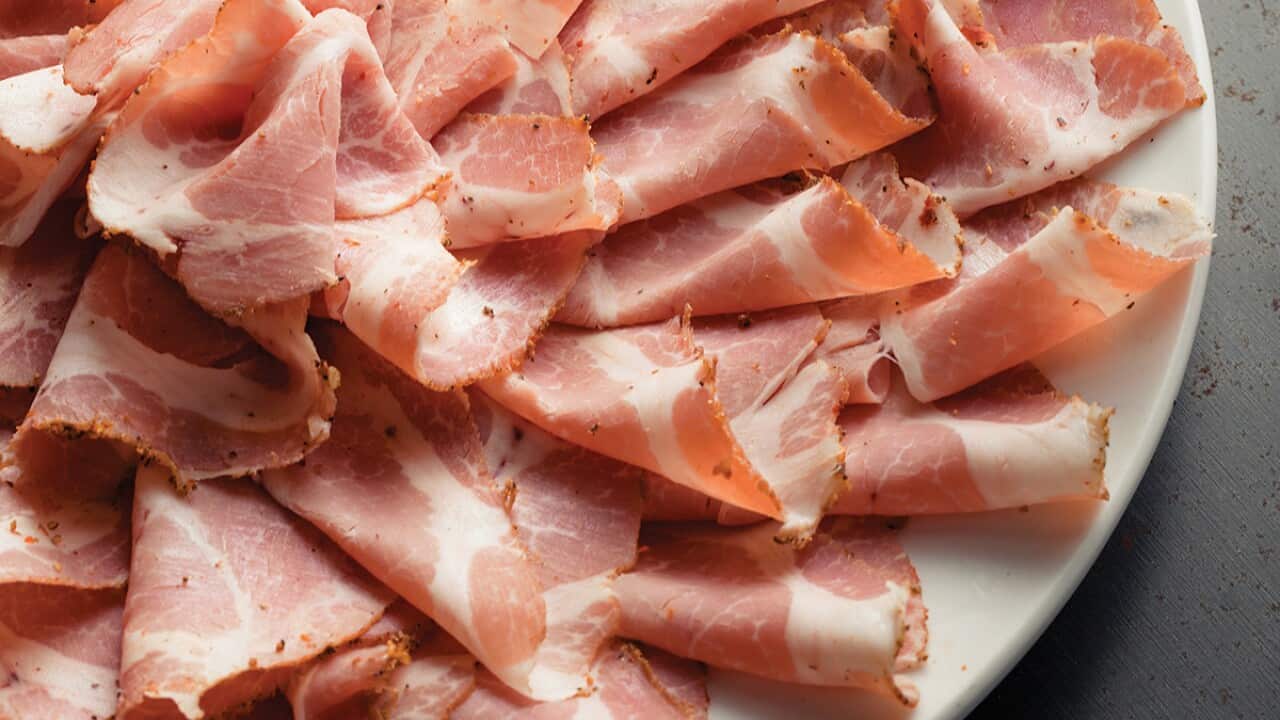
Making capicola follows clear steps that shape flavor and texture.
- Cut selection: The pork neck or shoulder is trimmed to a uniform shape.
- Salt cure: Meat is rubbed with salt and sometimes sugar to draw moisture and preserve it.
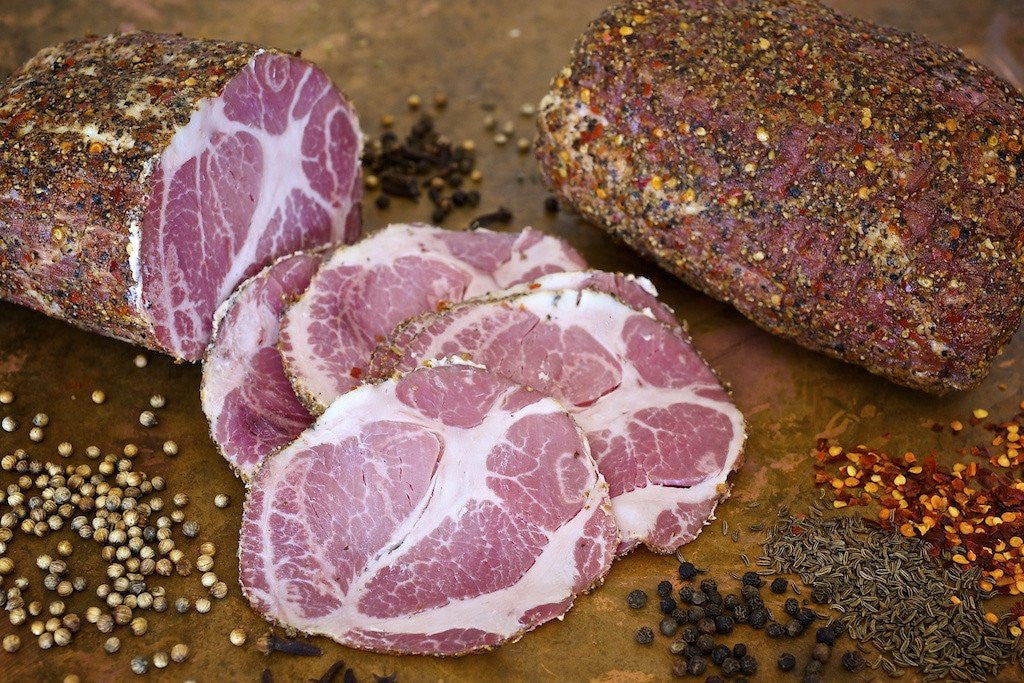
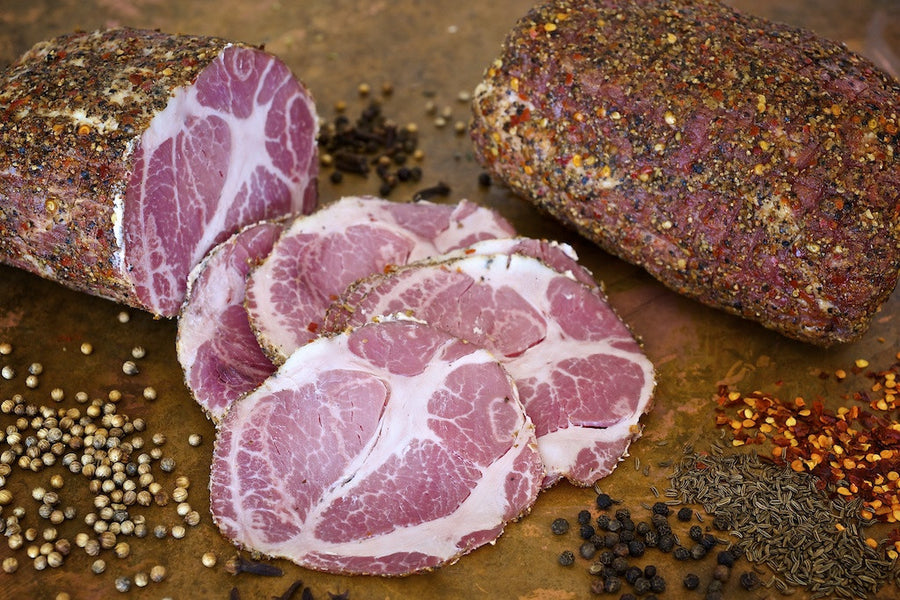
- Spices: Typical spices include black pepper, crushed red pepper, paprika, and garlic. Regional blends vary.
- Rest and press: The meat rests under weight to compact it and help distribute flavors.
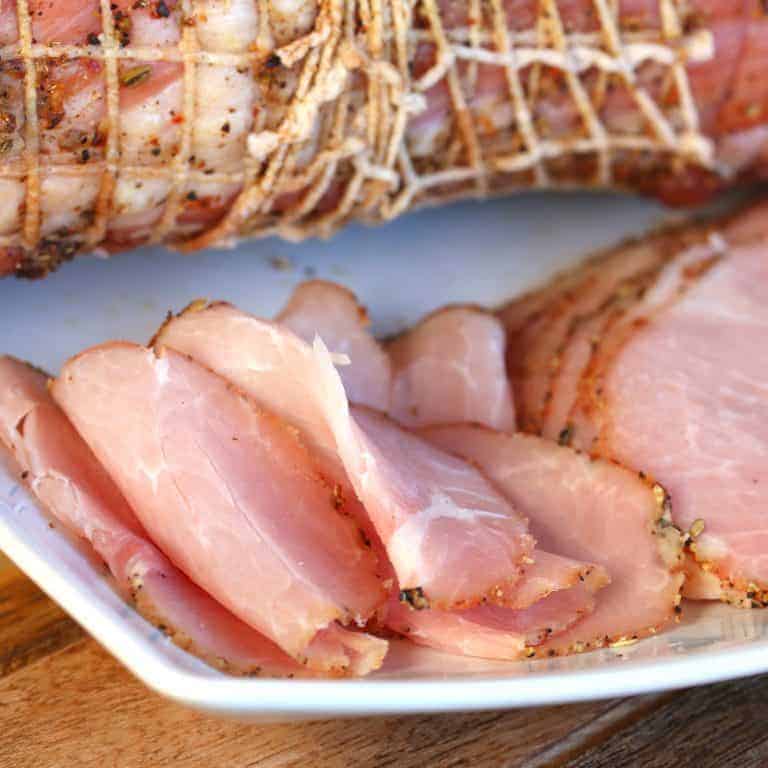
- Casing and tie: Meat may be encased in natural or synthetic casing and tied to hold shape.
- Drying and aging: Meat cures in controlled conditions for weeks to months. Time affects intensity and texture.
- Optional smoking: Some styles include light smoking for extra aroma.
Food safety matters. Proper salt, temperature, and humidity are essential. Commercial producers often use curing salts with nitrites to prevent harmful bacteria and preserve color.
Types and regional variations
Capicola shows strong regional identity. Different areas use unique spice mixes and curing times.
- Northern styles: Tend to be milder, with a balanced spice profile.
- Southern styles: Often spicier, sometimes using hot peppers or paprika.
- Local specialties: Certain towns have signature capicola with distinct curing rituals.
- American variations: Italian‑American delis created their own takes, sometimes saltier or smokier.
Some regions protect their capicola with origin labels, while others remain artisan family recipes. The result is many recognizable but distinct versions of capicola worldwide.
Flavor, texture, and how to serve
Capicola offers a complex mix of tastes and a silky texture.
- Flavor profile: Savory, slightly sweet, with peppery or smoky notes depending on spices.
- Texture: Firm but tender, with visible fat that melts on the tongue. Thin slicing enhances the mouthfeel.
- Serving suggestions: Use capicola on charcuterie boards, in sandwiches, on pizzas, or paired with melon. Warm it briefly for a softer texture or serve cold to enjoy the cured flavors.
Pair capicola with crusty bread, aged cheeses, pickles, and a crisp white wine or medium red.
Nutrition and health considerations
Capicola is flavorful but should be eaten with awareness of its nutrition profile.
- Macronutrients: High in protein and fat. A standard thin slice adds calories from fat.
- Sodium: Cured meats are often high in salt. Watch portion sizes if you monitor sodium.
- Preservatives: Some capicola uses curing salts with nitrites; others use natural curing methods. Choose based on preference and health needs.
- Moderation: Enjoy capicola as an occasional treat within a balanced diet.
If you have dietary limits, look for low‑sodium or nitrate‑free options and balance with fresh vegetables and whole grains.

Buying, storing, and cooking tips
Practical tips help you get the best capicola experience.
- Buying: Buy from a trusted deli or butcher. Look for even marbling, firm texture, and a pleasant aroma.
- Labels: Check ingredient lists for added sugars, artificial colors, or high sodium.
- Storing: Keep unopened capicola refrigerated. After opening, wrap it tightly and use within a week, or freeze for longer storage.
- Slicing: Slice very thin for best texture. A deli slicer gives ideal results, but a sharp knife works for home use.
- Cooking: Capicola is typically eaten uncooked. If you warm it, heat briefly to avoid drying it out.
Small producers often offer fresher, less salty capicola than mass‑market brands. Ask your deli for recommendations.
Capicola in recipes and pairings
Capicola adds depth to many dishes. Here are easy ideas and classic pairings.
- Capicola panini: Capicola, provolone, roasted peppers, and mustard on ciabatta. Press until cheese melts.
- Capicola and melon: A sweet‑and‑salty starter using thin capicola slices wrapped around cantaloupe.
- Pizza topping: Add thin slices to pizza after baking for a tender, savory finish.
- Pasta boost: Stir chopped capicola into simple tomato sauces for smoky depth.
- Pairings: Try crisp white wines, light reds, citrusy beers, olives, and aged cheeses.
Capicola works well with sweet elements like figs or pear to balance salt and spice.
Personal experience and practical tips
I’ve tasted capicola from small farms and city delis. A few lessons stand out.
- Buy from a trusted source. Small producers often balance salt and spice better than mass brands.
- Slice thin. The right thinness brings out marbling and makes the texture silky.
- Balance flavors. Pair capicola with fresh fruit or acidic pickles to cut richness.
- Avoid overcooking. Brief warming is fine, but long heat dries capicola quickly.
One memorable tasting came from a small Italian workshop where spices were toasted before rubbing. That step added a subtle, roasted aroma that I still seek out.
Frequently Asked Questions of What is Capicola
What is the difference between capicola and prosciutto?
Capicola is made from the pork neck or shoulder and is spiced and aged. Prosciutto is made from the hind leg and is typically salt‑cured without heavy spices.
How do you pronounce capicola?
Pronunciation is ca‑pi‑co‑la, with the stress on the third syllable. Some dialects shorten or alter the vowels, creating local variants.
Is capicola spicy?
Some styles of capicola are spicy, especially southern varieties that use red pepper or chili flakes. Mild versions use black pepper and garlic for a gentler heat.
Can pregnant people eat capicola?
Cured meats can carry a risk of listeria, so pregnant people should consult their healthcare provider and choose fully heated options or avoid uncooked cured meats. Heating to steaming can reduce risk but check with a doctor.
How long does capicola keep in the fridge?
Opened capicola usually keeps about one week when tightly wrapped in the fridge. Unopened, vacuum‑sealed capicola can last longer per the package guidelines.
Where can I buy authentic capicola?
Look for artisan delis, specialty charcuterie shops, or reputable online purveyors. Local farmers’ markets and small producers often offer high‑quality capicola.
Conclusion
Capicola is a versatile, flavorful cured pork that shines on boards, in sandwiches, and atop pizzas. Its rich history, varied regional styles, and simple preparation make it a favorite among charcuterie lovers. Try capicola sliced very thin from a trusted producer, pair it with a bright counterpoint like melon or pickles, and enjoy it in moderation.
If you enjoyed this guide, try a small tasting of different capicola styles, leave a comment with your favorite pairing, or subscribe for more charcuterie tips and recipes.

