

A knife bolster is the thick junction between blade and handle that adds balance and safety.
I have worked with knives for years as a maker, sharpener, and user. I will explain what a knife bolster is, why it matters, and how to pick and care for one. This guide covers types, materials, real-world pros and cons, buying tips, and short answers to common questions so you can make smart choices about knife bolster features.
What is a Knife Bolster?
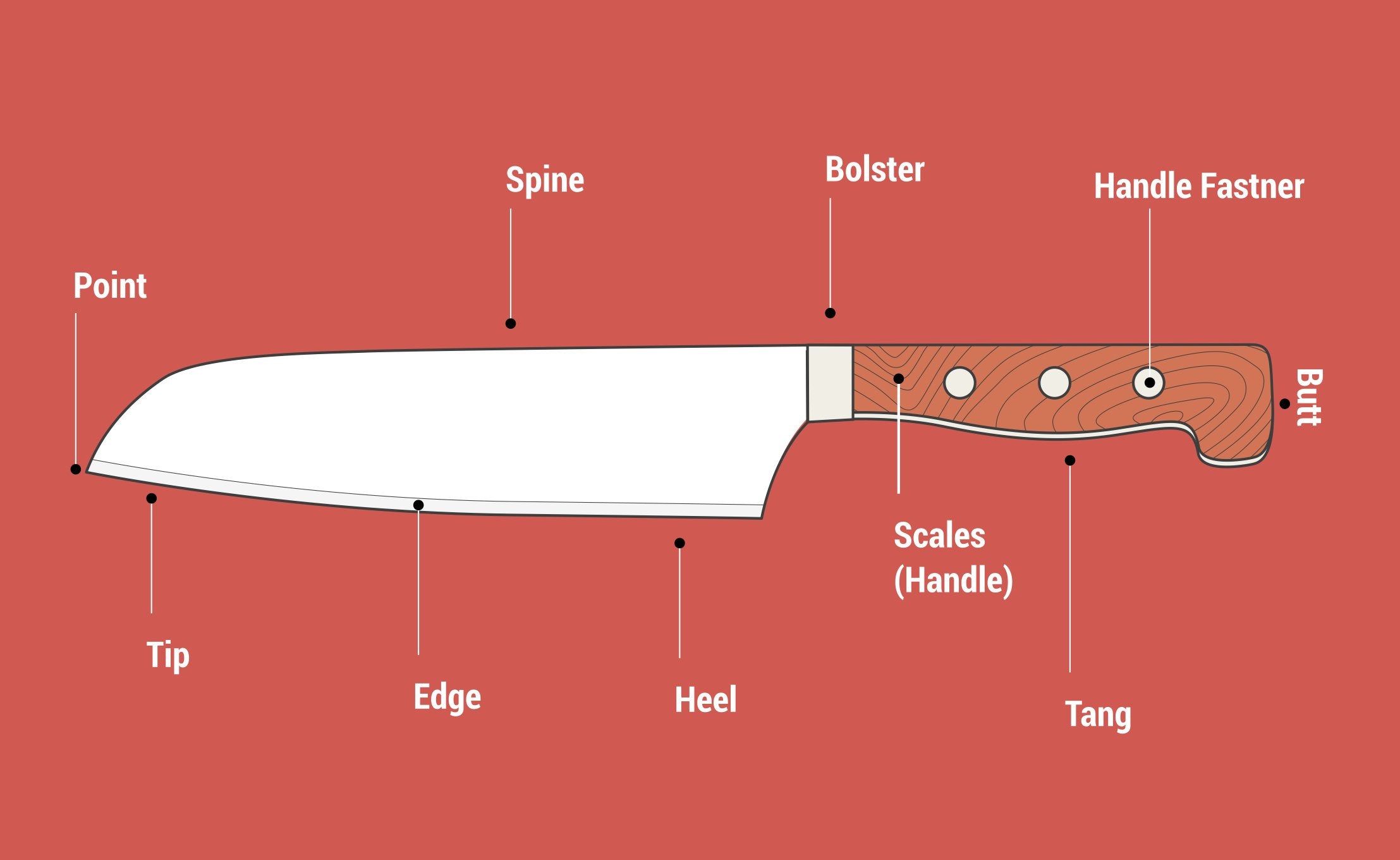
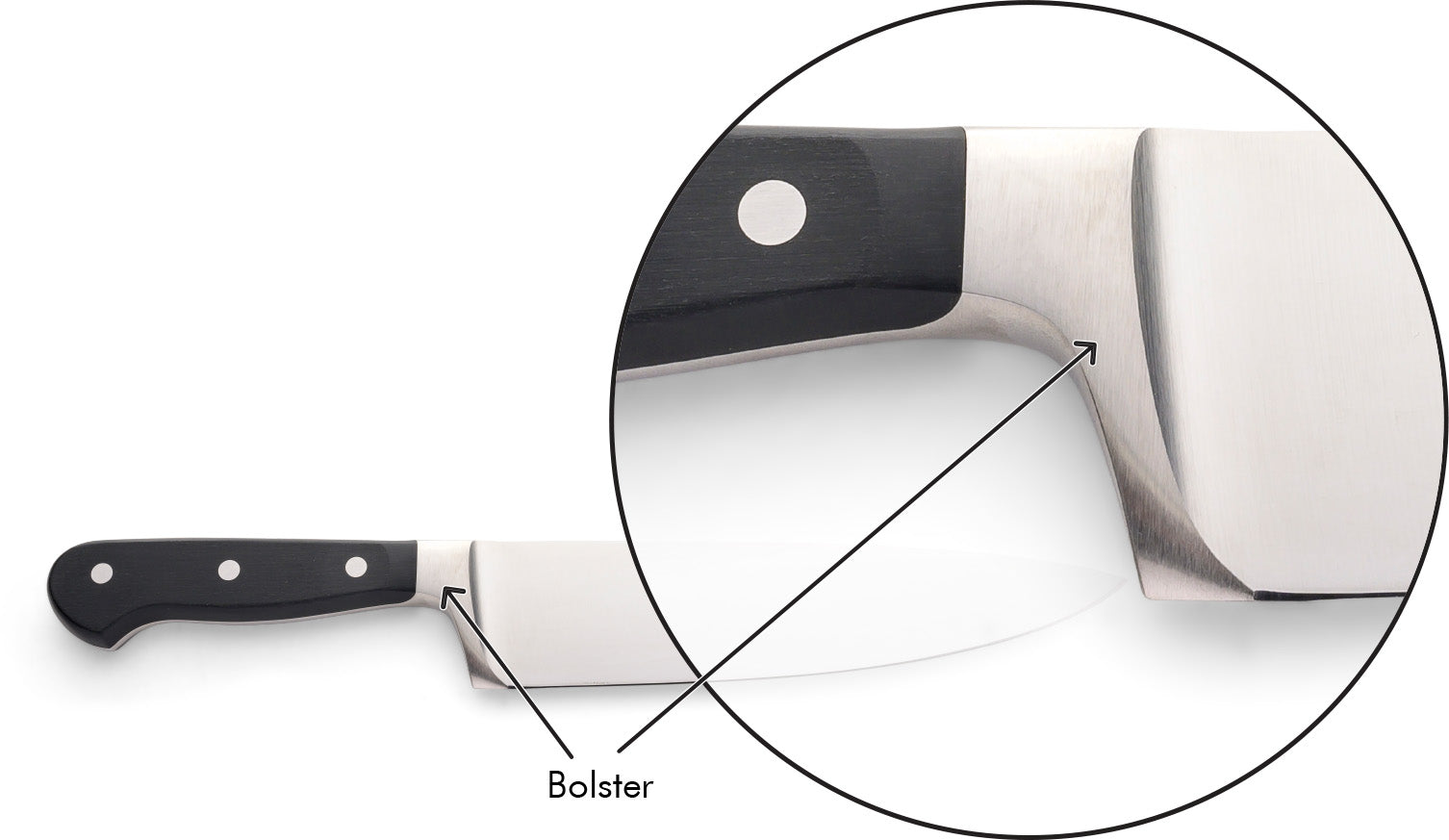
A knife bolster is the thicker piece of metal located where the blade meets the handle. It can be integral to the blade or fitted between the blade and handle. The bolster helps balance the knife, protects fingers from slipping onto the blade, and can strengthen the knife at a key stress point. Many chefs and collectors check the knife bolster to judge fit, feel, and build quality.

Types of Knife Bolsters
There are several common types of knife bolster. Each type affects feel, weight, and how you sharpen or use the knife.
- Full bolster — The bolster runs along the entire heel and often adds significant weight and a clear finger guard. It is common on many Western-style knives.
- Partial bolster — The bolster covers only part of the heel. It saves weight and makes sharpening the blade easier.
- Double bolster — A symmetrical metal block on both sides of the blade, often decorative and strong.
- Integral or tapered bolster — The blade steel is thickened and tapered into the handle. It gives a smooth transition and can be lighter than a full bolster.
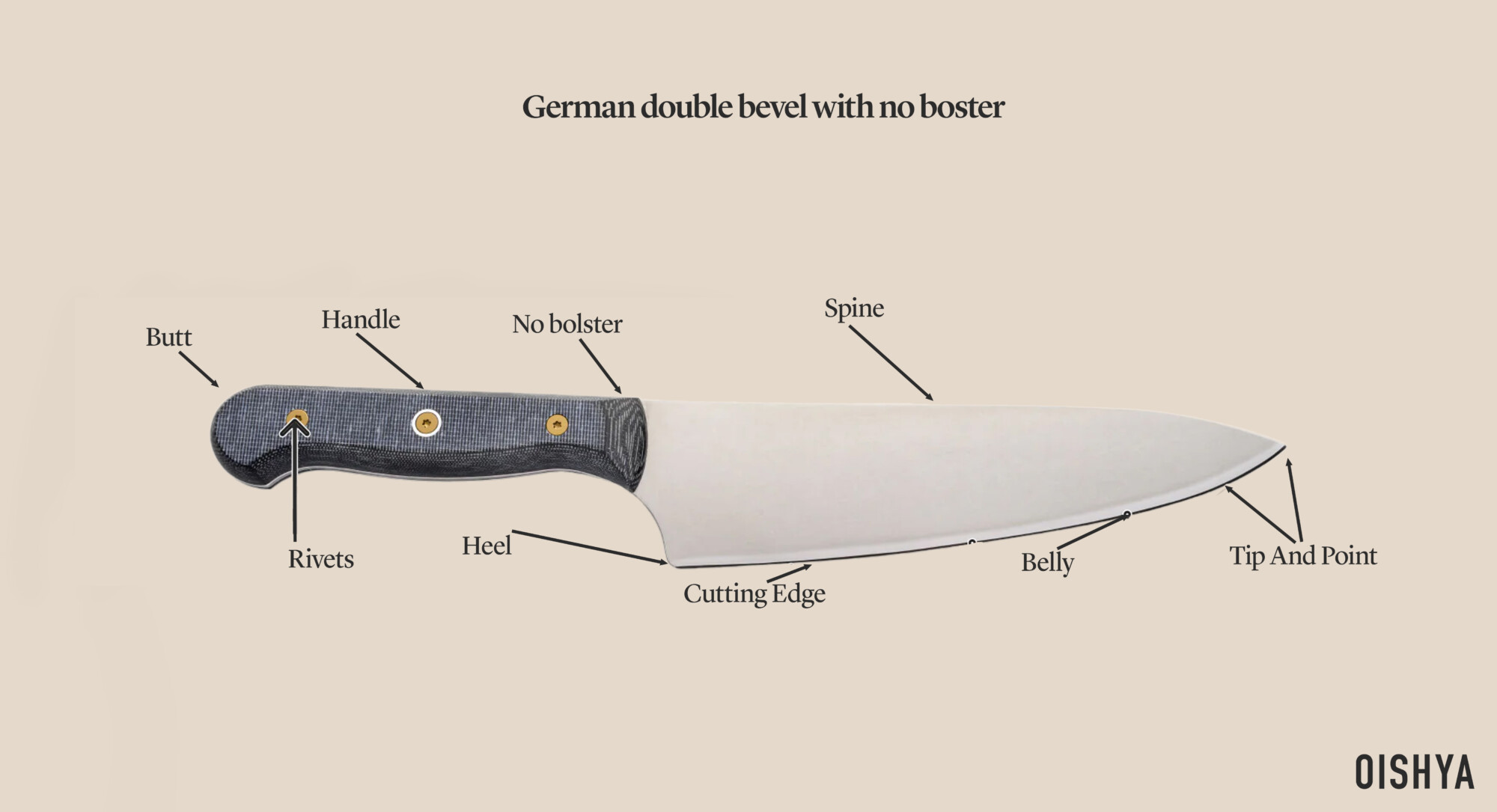
- No bolster — Some modern knives omit a bolster to reduce weight and allow full-heel sharpening.
Functions and Benefits of a Knife Bolster
A bolster serves practical and ergonomic roles on a knife. Here are the core functions and benefits.
- Safety — A bolster prevents your fingers from sliding forward onto the blade while you cut.
- Balance — Bolsters add mass near the handle for a more balanced feel in hand.
- Strength — Bolsters reinforce the blade-to-handle junction, reducing stress and loosening.
- Grip comfort — A bolster gives a finger rest and a secure stopping point for pinches or grips.
- Aesthetics — A well-made bolster adds visual weight and can look premium on a knife.

Materials and Manufacturing of Knife Bolsters
Bolsters are made from various metals and by different methods. The material affects durability, corrosion resistance, and appearance.
- Stainless steel — Common for corrosion resistance and ease of polishing.
- Carbon steel — Strong and durable but can rust if not cared for.
- Brass or nickel silver — Used for decorative bolsters and warm tones.
- Integral (from the same steel as the blade) — Offers the best structural bond and fewer weak points.
- Attached bolsters — Made separately then riveted or brazed into place; these can be repaired or replaced more easily.
Manufacturing methods include forging the bolster as part of the blade, machining bolsters from stock, or fitting and soldering pre-made bolsters to the tang. Each method influences cost and long-term strength.

How to Inspect and Choose a Good Knife Bolster
When shopping for a knife, check the bolster carefully. Small differences change how the knife feels and performs.
- Feel the transition — The bolster should meet the handle and blade smoothly with no gaps.
- Check balance — Hold the knife by the handle. A bolster that matches your grip will balance the blade naturally.
- Think about sharpening — If you sharpen to the heel often, a partial or no bolster allows access to the full edge.
- Match use and weight — Heavy bolsters suit heavy tasks and some cooks. Lighter bolsters help with fine work.
- Look for corrosion — On stainless bolsters this is rare. On brass or iron bolsters check patina or rust.
Buy a knife with a bolster that fits your grip and your work. Test the knife if possible. I prefer a subtle, tapered bolster for prep knives and a solid full bolster on heavy-duty knives.

Care, Maintenance, and Sharpening Considerations
Bolsters need care like any metal part. Good habits keep bolsters strong and looking nice.
- Clean after use — Wipe the bolster dry to avoid moisture spots.
- Avoid harsh pads — Use soft cloths to avoid scratching polished bolsters.
- Watch joints — If the bolster is attached, check for loosening or gaps over time.
- Sharpening — Full bolsters can block access to the heel. Use a guided system or a small stone to reach the full edge if needed.
- Polishing — Use a metal polish sparingly on decorative bolsters and rinse well after.
Regular checks and light maintenance extend the life of your knife bolster and the knife itself.

My Experience With Knife Bolsters
Over years of sharpening and using knives, I have learned what works. I once bought a chef’s knife with a heavy full bolster. It felt safe but made the knife tip-heavy for long prep sessions. I then tried a knife with a tapered integral bolster and found it cut longer and was easier to sharpen at the heel. These trials showed me to match bolster style to task and grip. Lessons learned: test weight, check the bolster-blade join, and consider future sharpening needs.
Quick PAA-Style Questions
Does a bolster make a knife safer?
A bolster adds a finger guard that helps prevent slips. It improves safety, especially for forceful cutting and for new cooks.
Can you sharpen a knife with a full bolster?
Yes, but the full bolster can block sharpening at the heel. Use a small stone or a guided sharpener that reaches the heel.
Does a bolster affect knife balance?
Yes, a bolster adds mass near the handle and changes the balance point. Proper balance makes repetitive cutting easier.
Frequently Asked Questions of What Is A Knife Bolster
What is the main purpose of a knife bolster?
The main purpose is to protect fingers and strengthen the junction between blade and handle. It also helps with balance and grip.
Is a bolster necessary on all knives?
No. Bolsters are common on many traditional knives but not necessary on every style. Modern knives may omit bolsters for lighter weight and full-heel sharpening access.
How do I know if a bolster is well-made?
A well-made bolster fits flush with no gaps, has smooth edges, and matches the handle and blade steel. It should not wiggle or show visible seams.
Can bolsters be replaced or repaired?
Yes. Attached bolsters can sometimes be repaired or replaced by a skilled knife maker or metalworker. Integral bolsters are part of the blade and need different repair methods.
Do bolsters rust or corrode?
They can if made of reactive metals like carbon steel or brass. Stainless bolsters resist corrosion better. Regular drying and care reduce rust risk.
Does a bolster add to the knife's value?
A high-quality bolster can add perceived and real value by improving balance, safety, and aesthetics. Collectors often value well-crafted bolsters.
Conclusion
A knife bolster is a small part with big impact. It shapes balance, safety, feel, and how you sharpen your knife. Choose a bolster that fits your hand and your work. Test knives where possible, and think ahead about maintenance and sharpening. Try different styles and trust the feel in your hand. If you enjoyed this guide, leave a comment with your bolster questions, subscribe for more knife tips, or try a side-by-side test to find the right knife bolster for your kitchen.

