

Why Is Italian Gigli Pasta Called Gigli?
Italy is famous for its pasta, with hundreds of shapes and styles found across the country. Among these, Gigli pasta is both beautiful and unique. If you have ever noticed its elegant, fluted shape or wondered about its poetic name, you are not alone. Many people are curious: Why is Italian Gigli pasta called Gigli? To answer this, we need to look at its history, design, cultural meaning, and how it is used in Italian cuisine.
The Meaning Behind The Name “gigli”
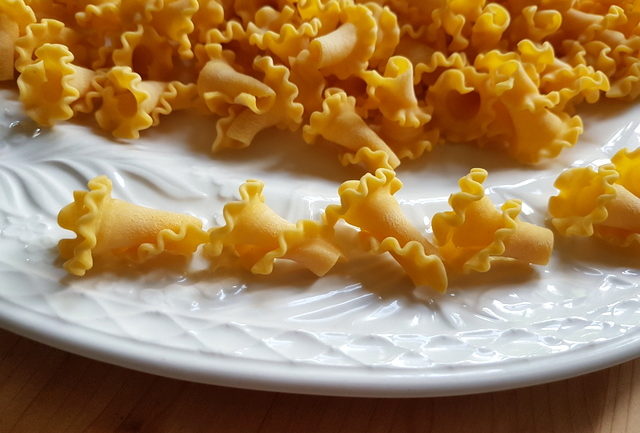
The word “gigli” (pronounced “jee-yee”) is Italian for “lilies.” This pasta’s name comes directly from its shape, which looks like a small, ruffled flower. The design mimics the petals of a lily, which is a symbol of beauty and purity in Italy.
In many Italian regions, especially in Tuscany, the lily is an important symbol. For example, the fleur-de-lis, a stylized lily, is the emblem of Florence. By naming the pasta “gigli,” the makers wanted to link it to this symbol of Italian heritage.
Why Lilies? A Cultural Connection
Lilies are more than just flowers in Italy. They represent:
- Purity and renewal in Christian tradition.
- The city of Florence, where the lily is on the city’s crest.
- Celebrations and festivals, where lilies decorate homes and churches.
Gigli pasta, shaped like a lily, carries these meanings to the dining table. It’s not just a food; it is a small piece of Italian art and culture.
The Origin And History Of Gigli Pasta
Gigli pasta has roots in Tuscany, a region known for its rich food traditions and artistic heritage. While the exact date of origin is unclear, historians believe gigli evolved from earlier flower-shaped pastas made for special occasions.
From “campanelle” To “gigli”
You might also hear gigli called campanelle in some shops. “Campanelle” means “little bells” in Italian, and the pasta is sometimes described as looking like a bell or a horn. However, gigli is the name most closely tied to the Tuscan tradition and the flower.
| Pasta Name | Translation | Shape Resembles | Region |
|---|---|---|---|
| Gigli | Lilies | Lily flower | Tuscany |
| Campanelle | Little bells | Bell or horn | Various |
This shows how pasta names often come from the things they look like or the places they are made.
Traditional And Modern Uses
Historically, gigli was made by hand for weddings or church events. Its flower shape made it a symbol of joy and celebration. Today, it is produced on a larger scale but still holds a special place in Tuscan kitchens.
How Gigli Pasta Is Made
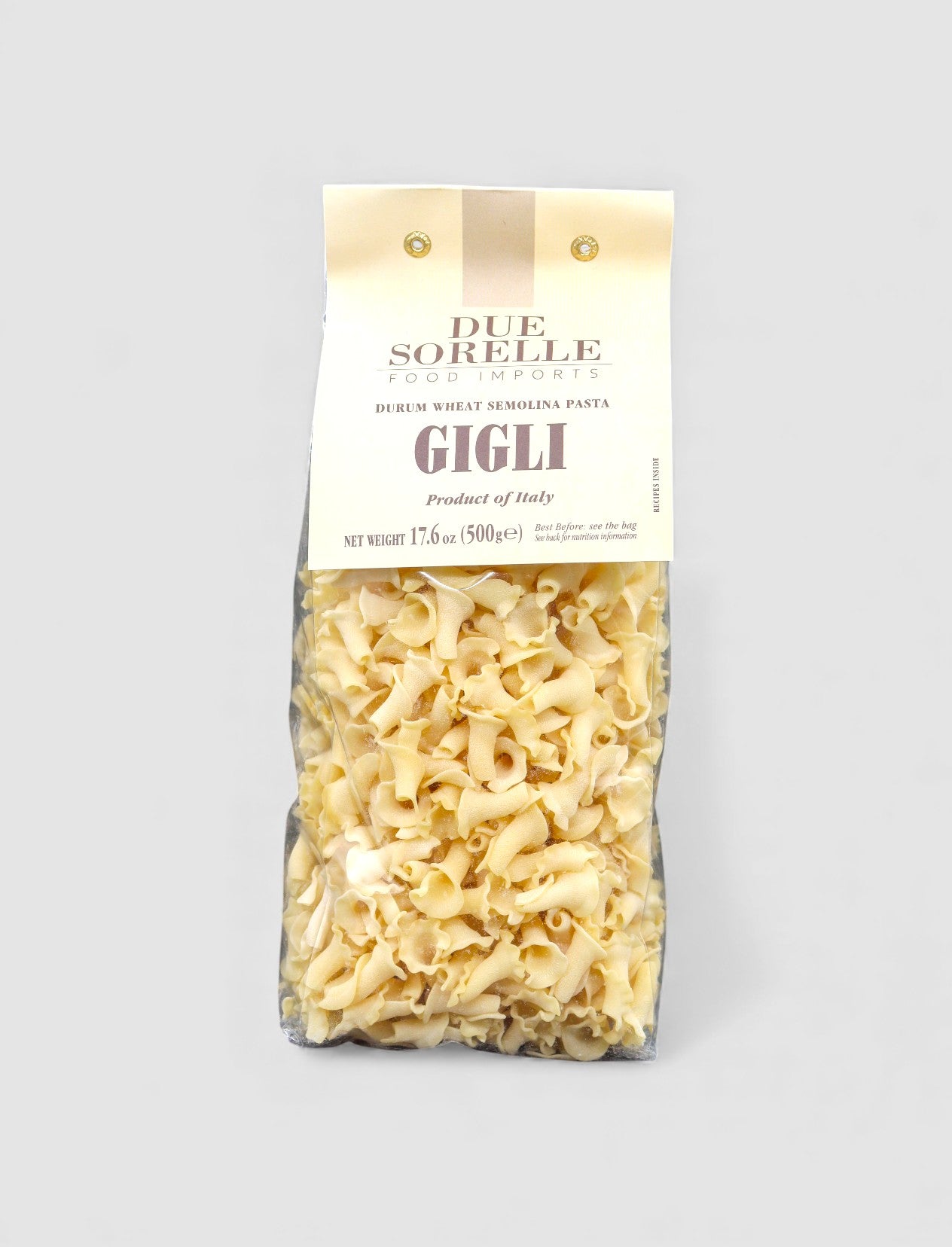
Gigli pasta is known for its ruffled, cone-shaped design. The dough is rolled thin, then cut and shaped around a small cone or finger to create the flower petal effect.
Ingredients And Process
The basic ingredients are simple:
- Durum wheat semolina
- Water
Traditional gigli does not use eggs, which makes it different from some other pasta types. The steps are:
- Mix semolina and water until a firm dough forms.
- Roll the dough thinly.
- Cut into small squares or circles.
- Wrap each piece around a stick or finger, pressing to create fluted edges.
- Dry for several hours before cooking.
Most commercial gigli today is made with machines, but some artisan producers still make it by hand.
Why The Shape Matters
The unique shape is not just for looks. The fluted edges and hollow center are perfect for holding thick sauces, making every bite flavorful. This is one reason gigli remains popular in both home kitchens and restaurants.
Gigli Pasta In Italian Cuisine
Gigli pasta is more than a pretty shape. It is a versatile pasta, perfect for many dishes. Its design helps sauces cling, making it ideal for rich, hearty meals.
Common Pairings
Gigli is often served with:
- Creamy sauces (like cheese or béchamel)
- Vegetable-based sauces (mushrooms, zucchini, or peas)
- Meat ragù (slow-cooked beef or pork)
- Pesto (basil or sun-dried tomato)
Its shape can also be used in baked pasta dishes, holding cheese and sauce well.
Regional Recipes
In Tuscany, gigli might be paired with wild boar ragù, a local specialty. In other places, it is used in vegetarian dishes with seasonal vegetables.
Comparing Gigli To Other Pasta Shapes
How does gigli compare to other popular pasta shapes? Let’s look at a few key differences:
| Pasta Shape | Main Feature | Best Sauce Type |
|---|---|---|
| Gigli | Flower-shaped, ruffled edges | Thick, creamy, or chunky sauces |
| Penne | Tube-shaped, angled ends | Tomato-based, chunky sauces |
| Farfalle | Bow-tie shape | Light cream or vegetable sauces |
| Fusilli | Spiral shape | Pesto, light tomato, or oil-based sauces |
Gigli’s shape is especially good at trapping sauce, which sets it apart from smoother, simpler shapes.
Symbolism And Italian Food Culture
Italian food is deeply connected to tradition and storytelling. Pasta shapes often tell a story about their region or the people who make them. Gigli is a perfect example of this connection.
Food As A Symbol
In Italy, the look and name of a food can carry deep meaning:
- Gigli = celebration, beauty, Florence
- Orecchiette (“little ears”) = family, tradition, southern Italy
- Strozzapreti (“priest stranglers”) = local legends and humor
This approach to food helps keep regional culture alive, even as pasta is enjoyed worldwide.
Non-obvious Insights
- Pasta shape can affect cooking time and sauce pairing. Many people only look at the shape, but gigli’s ruffles change how heat and sauce interact with the pasta, making it more satisfying in hearty dishes.
- Artisan pasta makers see gigli as a symbol of pride. In Tuscany, some families still pass down unique techniques for shaping gigli, showing how food connects generations.
How To Cook And Enjoy Gigli At Home
Cooking gigli is simple, but a few tips can help you get the best results.
Steps For Perfect Gigli
- Use plenty of water. Gigli needs space to move so the petals don’t stick together.
- Stir often. The ruffled edges can stick if left alone.
- Taste for doneness. Gigli is best when cooked al dente (firm to the bite).
- Reserve some pasta water. This helps make the sauce silky and helps it stick to the pasta.
Serving Ideas
- Toss with a creamy mushroom sauce and top with fresh herbs.
- Mix with roasted vegetables, olive oil, and grated Parmesan.
- Layer in a baked pasta dish with béchamel and spinach.
Common Mistakes To Avoid
- Overcooking: The delicate edges can get mushy.
- Too little sauce: Gigli needs enough sauce to fill its folds.
- Using watery sauces: Thick sauces work best for gigli’s shape.
Popularity And Availability
Gigli pasta is available in many Italian food shops and supermarkets outside Italy. While not as common as penne or spaghetti, its unique look is making it more popular with chefs and home cooks.
Interesting Statistics
- According to Italian pasta industry reports, over 300 different pasta shapes are produced in Italy.
- Gigli is among the top 50 most exported specialty pasta shapes from Tuscany.
- Demand for artisan-shaped pasta like gigli has increased by 20% in the last five years, as people look for more authentic cooking experiences.
For more on pasta shapes and Italian food history, you can visit Wikipedia.

Gigli In Modern Italian Cuisine
Chefs today use gigli in creative ways. Some pair it with non-traditional ingredients like seafood or spicy sausage. Its unique look makes it a favorite for food photography and high-end restaurant dishes.
Why Chefs Love Gigli
- Visual appeal: The flower shape looks elegant on the plate.
- Texture: Ruffled edges provide a pleasant bite.
- Sauce holding: Catches bits of meat, vegetables, or cheese.
These factors help gigli stand out in a crowded world of pasta options.
A Quick Guide: When To Choose Gigli
Not sure when to use gigli? Here’s a fast guide:
- Choose gigli for:
- Thick, creamy sauces
- Chunky vegetable or meat ragù
- Baked pasta dishes
- Avoid gigli for:
- Thin, watery sauces
- Broths or soups (it can become soggy)
Gigli is a great choice when you want both visual beauty and delicious taste.
Frequently Asked Questions
What Does “gigli” Mean In Italian?
Gigli means “lilies” in Italian. The pasta is named after the lily flower because of its petal-like, ruffled shape.
Is Gigli Pasta The Same As Campanelle?
They are very similar and sometimes used as the same name. Gigli is the Tuscan name, while campanelle means “little bells.” Both refer to the same flower or bell-shaped pasta, but gigli has a stronger cultural connection to Tuscany and Florence.
What Sauces Go Best With Gigli Pasta?
Thick, creamy, or chunky sauces are best. Gigli’s folds and hollow center trap the sauce, making every bite flavorful. Meat ragù, creamy cheese sauces, and pesto are popular choices.
Can You Make Gigli Pasta At Home?
Yes, but it can be tricky. Gigli is often made by hand using durum wheat semolina and water. You will need patience and some practice to shape each piece into a flower.
Why Is Pasta Shape Important In Italian Cooking?
Pasta shape affects the whole dish. Some shapes hold thick sauces better, while others are good for soups or light dressings. Gigli’s flower shape is perfect for catching rich sauces, making it a favorite for hearty meals.
No matter where you enjoy it, gigli pasta brings a taste of Italian tradition and beauty to your table. Its name, shape, and history make it much more than just a noodle—it’s a small celebration of Italian culture in every bite.

