

A pellet grill is a wood-pellet fueled cookstove that grills, smokes, bakes, and roasts.
I’ve worked with grills and smoked meats for years, and I write from hands-on experience and research. This guide answers What is a Pellet Grill in clear, practical terms. You’ll learn how it works, why cooks love it, the pros and cons, what pellets to use, how to clean and maintain one, and how to pick the right model for your needs. Read on for real tips, simple how-to steps, and mistakes I’ve learned from using pellet grills in backyards and test kitchens.
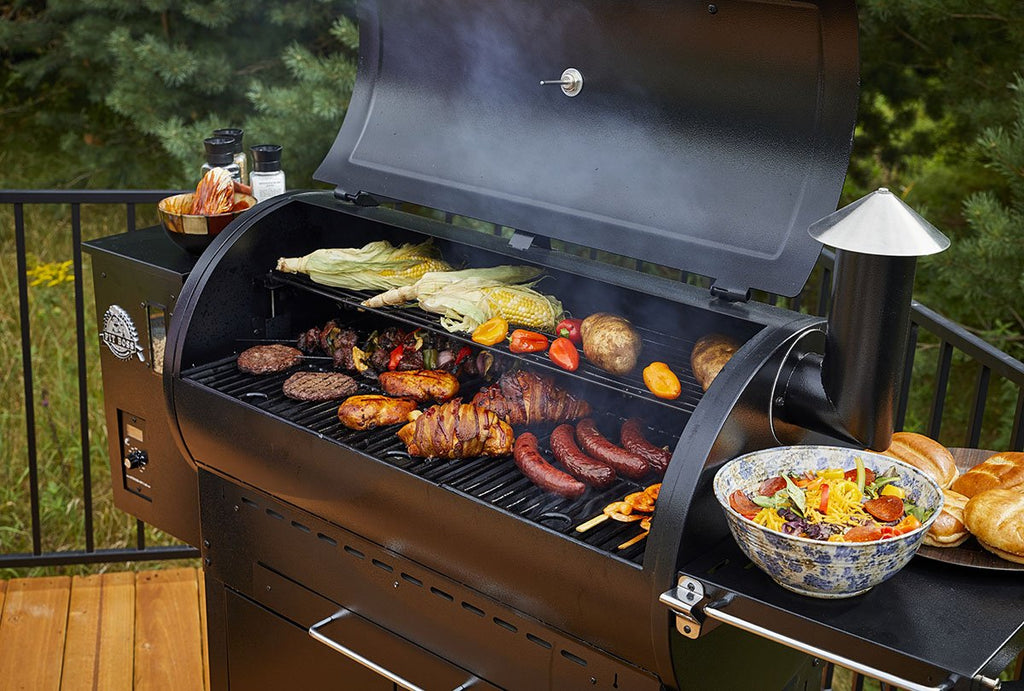
What is a Pellet Grill: Core Definition and Key Parts
A pellet grill is a powered outdoor cooker that uses compressed wood pellets as fuel. It has an electric auger that feeds pellets into a burn pot and a fan that controls air and heat. A digital controller keeps the grill at a steady temperature. That mix of wood heat and electric control lets you grill, smoke, bake, and roast with one unit.
Key parts include:
- Hopper that holds wood pellets for fuel.
- Auger that moves pellets to the fire pot.
- Burn pot where pellets ignite and produce heat and smoke.
- Fan and exhaust to manage airflow.
- Grill body and cooking grates.
- Digital controller or dial for temperature settings.
Understanding What is a Pellet Grill helps you see why it blends convenience with real wood flavor. Many models add Wi-Fi or meat probes for precise cooking.
How a Pellet Grill Works — Simple Step-by-Step
The way a pellet grill runs is easy to follow. It starts with pellets in the hopper. The controller tells the auger to move pellets into the burn pot. The pellets ignite and the fan helps the fire burn clean and steady. Heat spreads through the cooking chamber and cooks food evenly.
Step-by-step:
- Load pellets into the hopper.
- Set the temperature on the controller.
- The auger feeds pellets into the burn pot.
- An igniter lights the pellets.
- The fan adjusts airflow to reach and keep the set temp.
This process means you get steady heat like an oven plus the flavor of wood smoke. It also answers the common question of “What is a Pellet Grill” in a practical way.
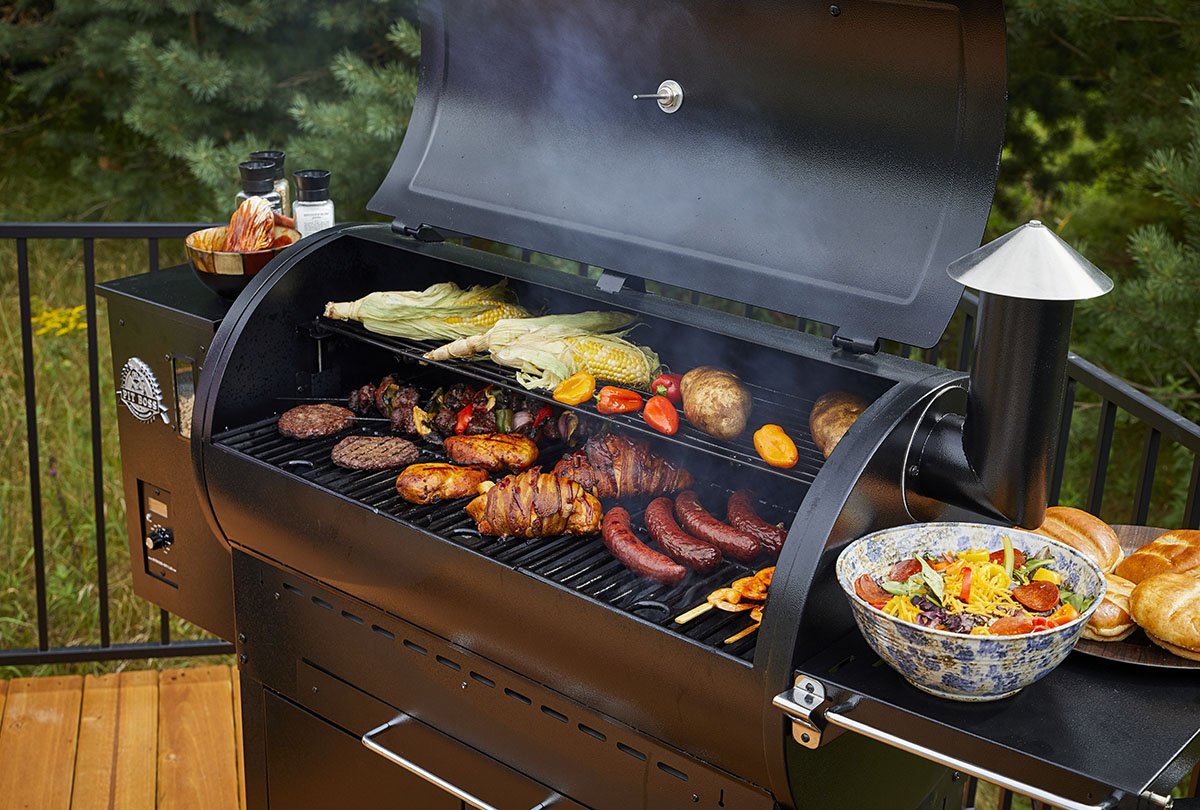
Benefits of a Pellet Grill
Pellet grills combine ease and flavor. They offer steady temps and the smoke from pure wood pellets. This makes them great for slow smoking or for searing at higher temps on models that reach 500°F or more.
Benefits include:
- Versatility to grill, smoke, bake, roast, and braise.
- Consistent temperature control thanks to the controller.
- Real wood flavor from a variety of pellet types.
- Low hands-on time during long cooks.
- Cleaner burn with less ash and fewer flare-ups.
From my testing, pellet grills shine for set-and-forget meals. I once smoked a brisket for 12 hours and only had to add pellets twice. That kind of convenience is a big reason to own one.
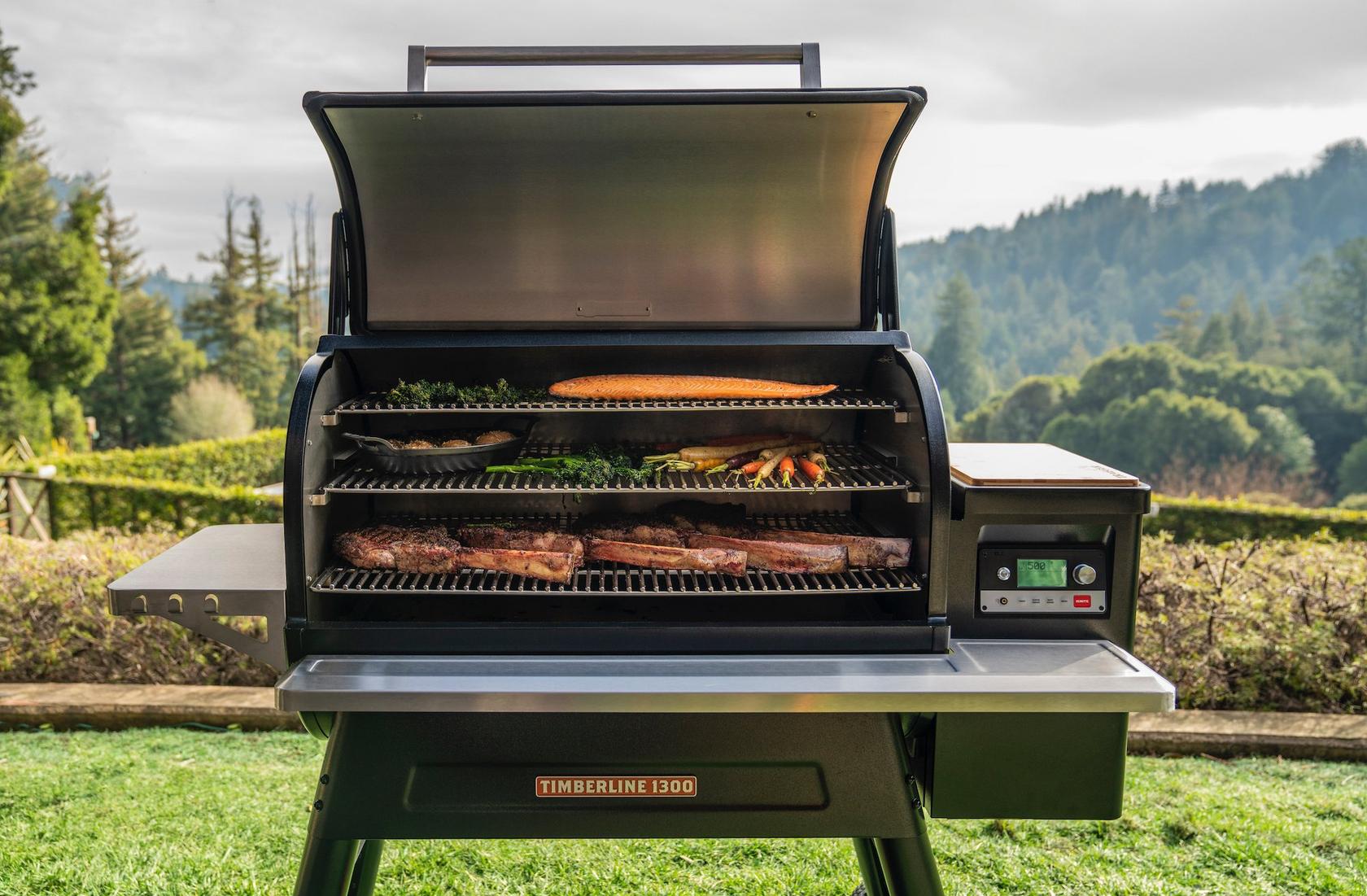
Limitations and Things to Watch For
No tool is perfect. Pellet grills have limits that matter to buyers.
Common limitations:
- Dependence on electricity to run the auger and fan.
- Less direct-flame searing on some models.
- Pellet supply needed; low-quality pellets can clog or add off-flavors.
- Higher initial cost than basic charcoal or gas grills.
Practical tip: If you live where power outages are common, keep a backup plan for cooking. I learned this after a storm emptied my freezer and left me with no way to run the grill.
Types of Pellets and Flavor Profiles
Pellets are made from compressed hardwood sawdust. Different woods give different flavors. Choose pellet type based on the food you cook.
Common pellet types:
- Hickory for strong, bacon-like smoke.
- Apple and cherry for mild, sweet flavors.
- Oak for balanced, versatile smoke.
- Mesquite for bold, intense flavor.
Pellet quality matters. Look for pellets labeled 100% hardwood with no fillers. Cheap pellets can have bark, glue, or bark dust that makes ash and bitter smoke.
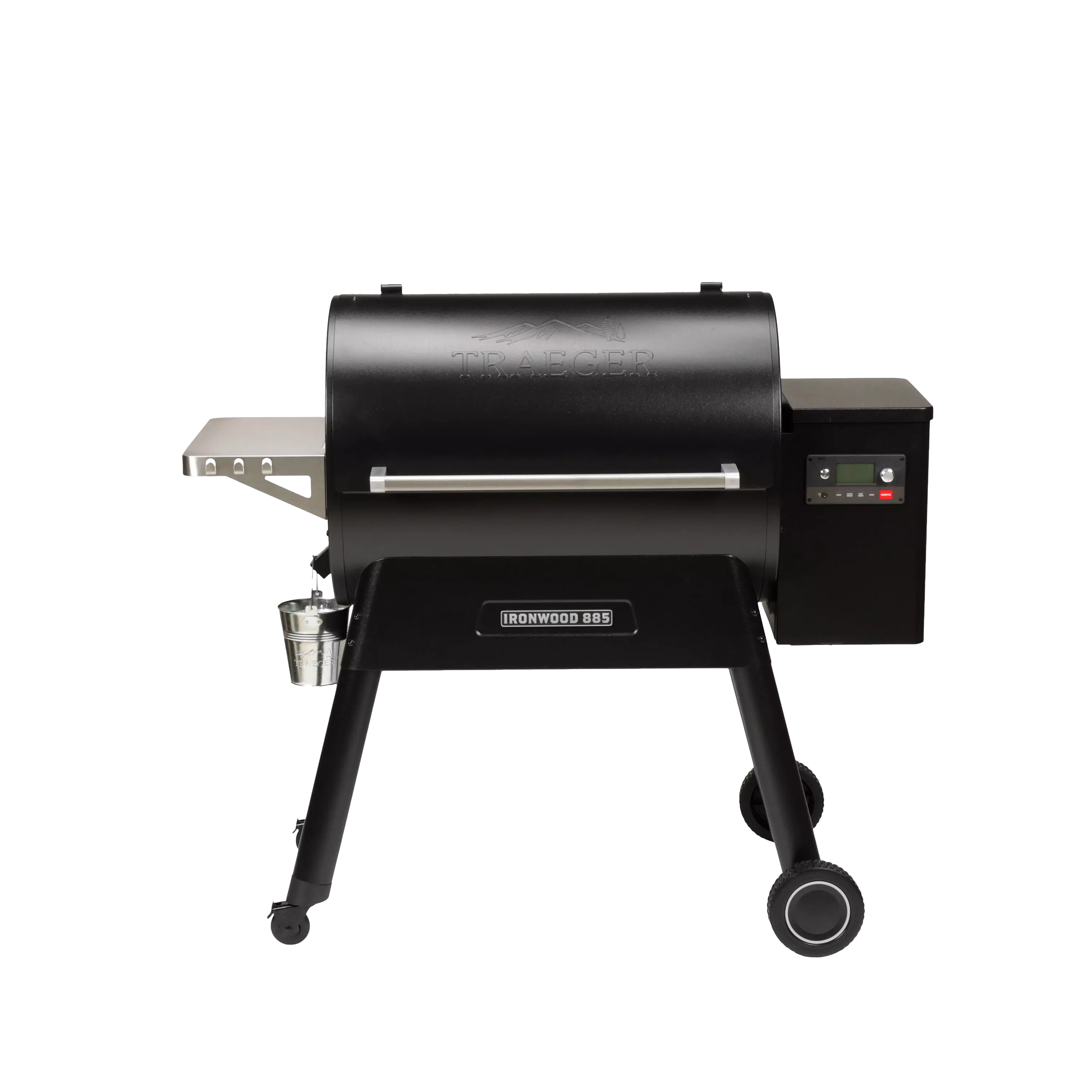
How to Use a Pellet Grill: Practical Tips
Using a pellet grill is simple once you get the hang of it. Start with these steps.
Basic use steps:
- Fill the hopper and check for damp pellets.
- Preheat to the desired temp for 10–15 minutes.
- Use a meat probe for large cuts to monitor internal temp.
- Add a water pan for extra humidity during long smokes.
- Clean the burn pot and ash after every few cooks.
Personal tip: For a crisp sear, preheat on high for 20 minutes, then sear directly over the hottest zone. I often finish ribs at low temp after a quick high-heat sear to lock in juices.
Maintenance and Safety
Regular care keeps a pellet grill working and safe. Clean ash and inspect parts frequently.
Maintenance checklist:
- Empty the hopper if you store pellets for a long time.
- Brush grates after each cook to avoid buildup.
- Vacuum ash from the fire pot every few cooks.
- Check the igniter and auger for signs of wear.
- Keep the grill covered to protect the electronics.
Safety tips:
- Keep the grill away from structures and flammable items.
- Never use wet pellets; they clog the auger and reduce heat.
- Follow the manufacturer’s wiring and outlet recommendations.
Buying Guide: How to Choose the Right Pellet Grill
Choosing the right model depends on how you cook and what you want.
Considerations:
- Size: Pick a cooking area that fits your usual crowd. Small for 2–4 people; large for family and parties.
- Temperature range: If you sear often, pick a model that reaches 450–500°F.
- Hopper capacity: Larger hoppers mean fewer pellet refills during long cooks.
- Controls: Simple dials are fine for basic cooks; digital or Wi-Fi controls help with precision.
- Build quality: Look for sturdy steel and good seals for even heat.
My advice: Buy the best grill you can afford. A well-built pellet grill lasts longer and gives more consistent results.
Recipes and Cooking Ideas
Pellet grills shine with many recipes. Try these simple ideas.
Easy ideas:
- Whole chicken smoked at 225°F for 3–4 hours until 165°F internal.
- Salmon fillets at 350°F for 20–30 minutes with apple pellets.
- Pork shoulder at 225°F for 10–14 hours, wrapped when it hits 165°F.
- Veggies roasted at 375°F for 15–25 minutes.
Experiment with pellet blends. I like cherry-hickory for pork and oak for beef. Small changes in pellet type change your final flavor in tasty ways.
Energy Use and Environmental Notes
Pellet grills use electricity and wood pellets. They burn cleaner than charcoal and often produce less smoke.
Points to know:
- Pellets are a renewable fuel if made from sawmill byproducts.
- Electric use is minor; a single cook uses a small fraction of household power.
- Check pellet source to ensure sustainable practices.
Being mindful about pellet brand and quality helps you cook better and reduce waste.
Common Misconceptions About Pellet Grills
People often confuse pellet grills with smokers or think they can’t sear. Both are wrong.
Myths and facts:
- Myth: Pellet grills only smoke slowly. Fact: Many reach high temps for searing.
- Myth: They don’t give real wood flavor. Fact: They provide real smoke from hardwood.
- Myth: They are always hard to use. Fact: They are generally easy and forgiving.
I broke a few rules early on. I once tried wet pellets and ended up with a jammed auger. Now I always store pellets dry.
Frequently Asked Questions of What is a Pellet Grill
What is a pellet grill best used for?
A pellet grill is best for low-and-slow smoking and versatile cooking like roasting, baking, and grilling. It offers consistent temps and real wood flavor with minimal effort.
How hot can a pellet grill get?
Most pellet grills reach 250–500°F. Some high-end models can go higher for better searing. Check the manufacturer’s spec for the exact top temperature.
Do pellet grills use a lot of pellets?
Pellet use varies by temperature. At low temps, you may use 1–2 pounds per hour. At high temps, use increases. A large cooker with heavy use may need several bags per month.
Are pellet grills easy to clean?
Yes. Clean ash from the burn pot and vacuum the firebox every few cooks. Wipe grates and empty the drip tray after each use for best results.
Can I use any pellets in a pellet grill?
Use 100% hardwood pellets made for grilling. Avoid pellets meant for stoves or those with fillers, binders, or bark. Quality pellets keep the auger and burn pot working well.
Do pellet grills need electricity?
Yes. They need electricity to run the auger, fan, and controller. Without power, the pellet grill cannot feed pellets or manage airflow.
Conclusion
Pellet grills blend the flavor of real wood with the ease of a smart oven. They answer the question What is a Pellet Grill by offering clear, steady heat and versatile cooking options. If you want set-and-forget smoking, consistent roasts, and a simple way to experiment with wood flavors, a pellet grill is a strong choice. Try a mid-size model if you are new, use quality pellets, and keep the unit clean. Share your first cook, tweak your pellet choice, and enjoy the process. Leave a comment with your favorite pellet flavor or a question, and subscribe for more tips and recipes.

