

A meat grinder is a simple yet powerful kitchen tool. It turns whole pieces of meat into ground meat for burgers, sausages, and many other recipes. If you have ever wondered how a meat grinder works, you are not alone.
Many people see them in kitchens or butcher shops but do not know what happens inside. Understanding a meat grinder is useful not only for cooks but for anyone who wants to control the quality of their food. Grinding your own meat gives you fresher results, better flavor, and the ability to control fat content.
Let’s explore how meat grinders work, from the basic mechanism to different types, their uses, and practical tips.
What Is A Meat Grinder?
A meat grinder is a device that cuts, crushes, and grinds meat into smaller pieces. It can be manual or electric. Some models are used at home, while others are built for commercial use in restaurants or butcher shops. The main purpose is to turn large cuts of meat into ground meat, which is used in many foods.
Home grinders are often small and easy to use. Commercial grinders are bigger and can handle more meat at once. The design is simple, but the tool is very effective. Whether you want to make your own burgers or sausages, a meat grinder is a key kitchen tool.
Main Parts Of A Meat Grinder
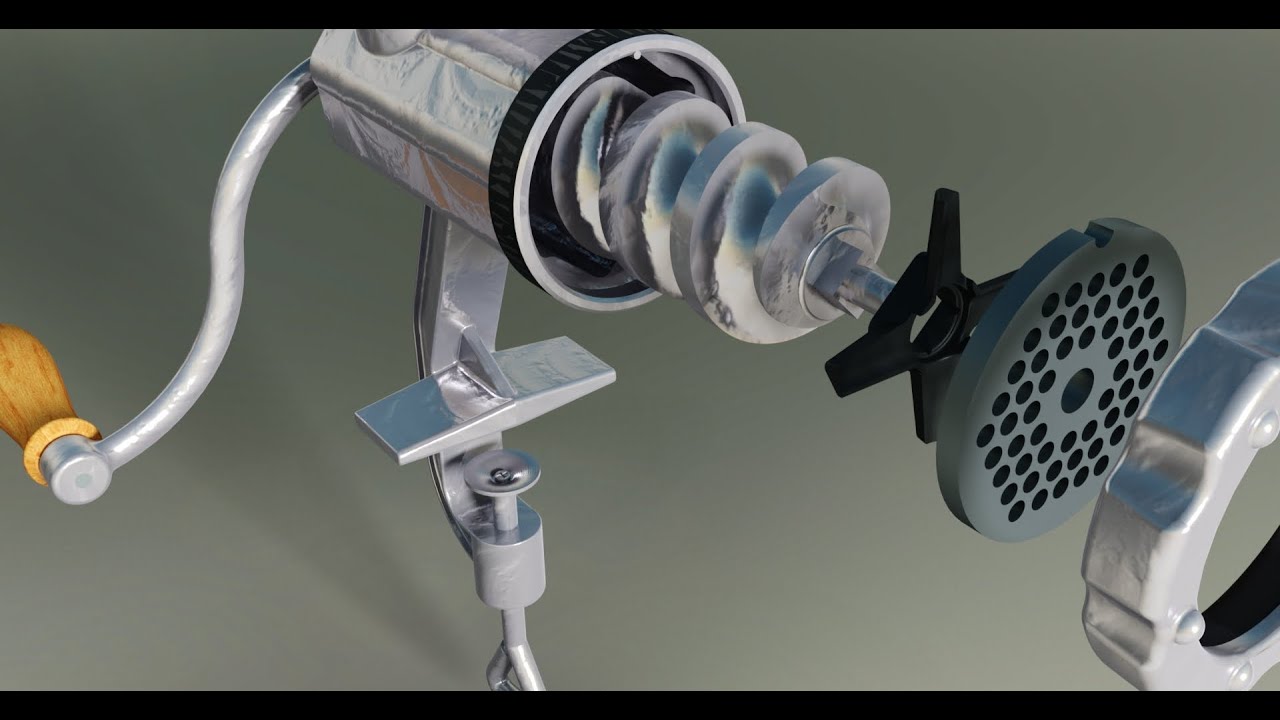
To understand how a meat grinder works, you need to know its main parts. Each part has a specific job.
| Part | Description | Role |
|---|---|---|
| Hopper | Large opening on top | Where you put meat |
| Feed tube | Tube under the hopper | Guides meat to blades |
| Auger (screw) | Spiral-shaped metal piece | Pushes meat forward |
| Blades (knife) | Sharp rotating piece | Cuts meat into small bits |
| Grinding plate | Metal disk with holes | Controls meat texture |
| Motor/handle | Power source | Turns auger and blades |
| Output plate | End of grinder | Ground meat comes out |
Each part helps move, cut, and grind the meat. The size of the grinding plate holes decides how fine or coarse the meat will be.
How Does A Meat Grinder Work? Step-by-step
The process is simple, but each step matters. Here’s how a meat grinder works:
- Meat is placed in the hopper. The hopper is the starting point. It holds the meat before grinding.
- Meat moves into the feed tube. Gravity or a pusher helps guide the meat into the feed tube.
- The auger pushes meat forward. The auger is a spiral piece inside the feed tube. When you turn the handle or switch on the motor, the auger rotates and moves the meat toward the blades.
- The blades cut the meat. As meat reaches the blades, they slice it into smaller pieces.
- Meat passes through the grinding plate. The cut meat is forced through holes in the grinding plate. The size of these holes decides how fine the meat will be.
- Ground meat comes out of the grinder. The final product comes out through the output plate, ready to use.
Example: Making Burger Patties
If you want to make burgers, you start with fresh beef. Cut it into small pieces, put them into the hopper, and grind them. The result is ground beef, which you can shape into burger patties. You can also add fat or spices before grinding for extra flavor.
Types Of Meat Grinders
There are several types of meat grinders. Each has its own uses and benefits.
Manual Meat Grinders
Manual grinders use a hand crank. They are simple, affordable, and good for small jobs. These grinders are best for home use or for people who grind meat only sometimes.
- Easy to clean
- No electricity needed
- Slower than electric models
Electric Meat Grinders
Electric grinders use a motor. They are faster and can handle more meat. These are common in home kitchens and professional settings.
- Quick and easy
- Can grind large amounts
- More expensive
Commercial Meat Grinders
These are large, heavy-duty machines. They are used in butcher shops and restaurants. Commercial grinders can grind hundreds of pounds per hour.
- Built for heavy use
- Durable and reliable
- Often have advanced features
Attachment Grinders
Some stand mixers, like the KitchenAid, offer grinder attachments. These are good for home cooks who already own a mixer. They are smaller and less powerful than dedicated electric grinders.
Comparing Meat Grinder Types
Here’s a simple comparison to help you choose:
| Type | Power Source | Best For | Typical Price Range |
|---|---|---|---|
| Manual | Hand crank | Small jobs, home use | $25–$75 |
| Electric | Motor | Frequent home use | $80–$300 |
| Commercial | Motor (heavy-duty) | Butcher shops, restaurants | $400–$2000+ |
| Attachment | Stand mixer | Light home use | $45–$120 |
The Science Behind Meat Grinding
Grinding meat is more than just cutting. It changes the texture and mixes fat and muscle. This affects taste and cooking results.
Texture
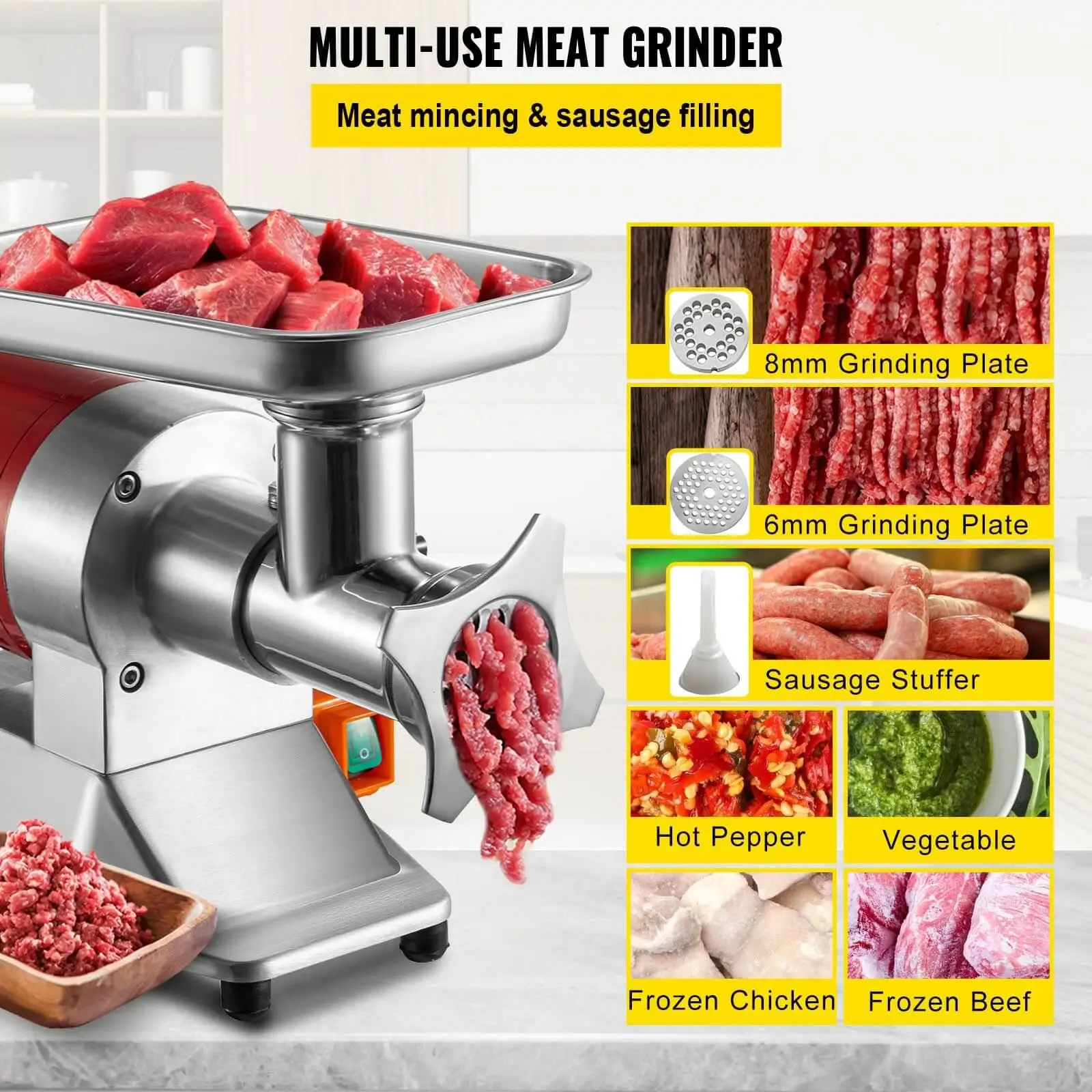
The grinder breaks meat into small pieces. The grinding plate controls size. Fine plates (1/8 inch holes) make smooth meat for sausages. Coarse plates (1/4 inch holes) make chunky meat for chili or burgers.
Mixing
Grinding mixes fat and lean parts. When you grind beef with 20% fat, the fat spreads through the meat. This gives burgers a juicy texture.
Safety
Grinding meat at home can reduce the risk of contamination. When you buy pre-ground meat, bacteria can grow if the meat is old or handled poorly. Grinding your own meat lets you control freshness.
What Can You Grind?
Meat grinders are not just for beef. You can grind many foods.
- Beef
- Pork
- Chicken
- Turkey
- Fish
- Lamb
- Game meats (deer, elk)
- Vegetables (for vegetarian dishes)
- Cheese (for spreads)
- Nuts (for nut butter)
Grinding at home lets you mix meats or add spices and herbs. For example, you can grind pork and beef together for meatballs.
Using A Meat Grinder: Practical Tips
To get good results, follow these tips:
- Keep meat cold. Cold meat grinds better. Warm meat turns mushy and sticks to the grinder.
- Cut meat into small pieces. The grinder works best with chunks about 1–2 inches. This helps the auger push meat smoothly.
- Remove bones and sinew. Bones can break the grinder. Sinew (tough connective tissue) can clog blades.
- Clean grinder before and after use. Washing all parts prevents bacteria growth.
- Use the right grinding plate. Choose plate size for your recipe. Fine for sausages, coarse for burgers.
- Do not overload the grinder. Too much meat can jam the auger.
Common Mistakes
Many beginners make these mistakes:
- Using warm meat (causes smearing)
- Not cleaning the grinder (risk of contamination)
- Grinding too fast (can overheat motor)
- Forgetting to remove bones
Meat Grinder Safety
Safety is important. Meat grinders have sharp blades and powerful motors.
- Always unplug electric grinders before cleaning.
- Keep fingers away from the feed tube. Use a pusher tool.
- Wear gloves if handling raw meat.
- Do not let children use grinders unsupervised.
- Clean all parts after each use.
Most injuries happen when people try to push meat with their fingers or clean while the grinder is still plugged in.
Cleaning And Maintenance
Keeping your grinder clean keeps food safe and extends machine life.
- Disassemble the grinder. Take apart hopper, auger, blades, and plates.
- Wash with hot, soapy water. Scrub all parts well.
- Dry completely. Moisture can cause rust.
- Oil metal parts if needed. A light food-safe oil prevents rust.
- Store in a dry place.
Electric grinders need extra care. Do not submerge motor parts in water. Wipe with a damp cloth.
Advanced Cleaning: Preventing Cross-contamination
If you grind different meats, wash parts between batches. For example, after grinding chicken, wash before grinding beef. This prevents spreading bacteria.
Choosing The Right Meat Grinder
Picking a meat grinder depends on your needs.
Key Factors
- Amount of meat: Small jobs need manual or attachment grinders. Large jobs need electric or commercial models.
- Budget: Manual grinders are cheapest. Commercial grinders are most expensive.
- Frequency of use: If you grind often, invest in a powerful electric model.
- Features: Some grinders offer sausage stuffing, different plate sizes, or reverse function for jams.
Example: Family Of Four
If you cook burgers and sausages for a family of four, an electric grinder with 250–500 watts of power is enough. Look for a model with two or three plate sizes.
Example: Small Restaurant
A restaurant needs a grinder that can handle 50–100 pounds per hour. Commercial models with stainless steel parts and cooling fans are best.
Comparing Popular Meat Grinder Models
To help you decide, here’s a comparison of three top models:
| Model | Type | Power | Capacity | Price |
|---|---|---|---|---|
| LEM Big Bite #8 | Electric | 575 watts | Up to 7 lbs/min | $350 |
| KitchenAid Attachment | Attachment | Stand mixer | Up to 2 lbs/min | $100 |
| Weston Pro Series | Commercial | 1,500 watts | Up to 18 lbs/min | $600 |
Grinding Meat At Home: Benefits
There are several reasons to grind meat at home:
- Freshness: You control how fresh the meat is.
- Quality: You pick the cuts and control fat levels.
- Taste: Fresh ground meat tastes better.
- Safety: Less risk of contamination.
- Customization: Mix meats, add spices, or make special blends.
Many store-bought ground meats have extra fillers or preservatives. When you grind your own, you know exactly what is in your food.
Advanced Uses And Attachments
Meat grinders can do more than grind meat. Some models offer attachments for extra tasks.
Sausage Stuffer
Many grinders come with a sausage stuffing tube. You grind meat and fill sausage casings with the same machine.
Pasta Maker
Some grinders have attachments for making pasta shapes.
Vegetable Cutter
A few models offer vegetable slicers. You can slice or shred vegetables for salads or stir-fries.
Non-obvious Insights
Most beginners overlook these points:
- Grinding meat at home lets you control the ratio of fat to lean. This affects how burgers cook and taste. For example, a blend of 80% lean, 20% fat is ideal for juicy burgers.
- If you want a smoother texture for sausages, grind meat twice. Use a coarse plate first, then a fine plate. This is a common butcher trick.
Troubleshooting Common Problems
Sometimes grinders do not work as expected. Here’s how to fix common issues:
Grinder Jams
If your grinder jams, it is usually because of sinew, too much meat, or dull blades.
- Remove sinew and cut meat smaller.
- Clean the blades and plates.
- Sharpen or replace blades if needed.
Uneven Grinding
If meat comes out uneven, check plate size. Make sure blades are sharp and plates are clean.
Overheating
If your electric grinder overheats, pause and let it cool. Do not grind too fast or overload.
Meat Grinder History And Modern Trends
Meat grinders have been around since the 1800s. Early models were hand-cranked and made of cast iron. Today, grinders are made of stainless steel, plastic, and have powerful motors.
Modern trends include grinders with reverse functions (to clear jams), multiple plate sizes, and easy cleaning features. Some models are designed for home cooks, while others are built for professionals.
There is also more focus on safety, with features like automatic shutoff and finger guards.
Environmental Impact
Grinding meat at home can help reduce waste. You can use all parts of the meat and avoid packaging from store-bought ground meat. Some people even grind leftover cooked meat to reuse in recipes.
How Meat Grinders Affect Cooking
The way meat is ground changes how it cooks. Fine ground meat cooks faster and is good for sausages. Coarse ground meat is better for burgers and chili.
Grinding also helps mix spices and flavors. When you add garlic or herbs before grinding, they blend into the meat better.

Where To Learn More
If you want to read more about the science and history of meat grinders, visit Wikipedia.
Frequently Asked Questions
How Do I Clean A Meat Grinder?
Disassemble all parts. Wash with hot, soapy water. Rinse and dry fully. Oil metal parts if needed. Do not submerge electric motor in water—wipe with a cloth.
Can I Grind Vegetables Or Nuts In A Meat Grinder?
Yes, many grinders can handle vegetables, nuts, and cheese. Use the correct plate and clean thoroughly afterward.
What Size Grinding Plate Should I Use?
For burgers, use a coarse plate (1/4 inch). For sausages, use a fine plate (1/8 inch). For meatballs, medium plate (3/16 inch) works well.
Is It Safe To Grind Raw Chicken?
Yes, but clean the grinder carefully afterward. Raw chicken can carry bacteria. Wash all parts and hands after use.
Why Does My Ground Meat Look Mushy?
This happens if the meat is too warm, or if the grinder is overloaded. Chill meat before grinding and cut into small pieces.
Grinding your own meat is easy once you know how a meat grinder works. It gives you better control over quality, taste, and safety. With the right grinder, you can make burgers, sausages, and many other foods at home. Remember to keep meat cold, clean your grinder, and use the right plate for your recipe.
Whether you are a home cook or a professional, understanding how a meat grinder works will improve your cooking and help you enjoy fresher, tastier meals.

