

What does Gigli pasta taste like? This question comes up often among pasta lovers who want to try something beyond the usual spaghetti or penne. Gigli pasta, with its unique fluted and flower-like shape, not only looks beautiful but also brings a special experience to the table.
If you’re curious about its flavor, texture, and how it interacts with sauces, you’re in the right place. Let’s explore every detail so you know exactly what to expect before your first bite.
What Is Gigli Pasta?
Gigli pasta, sometimes called campanelle (which means “little bells” in Italian), is a type of short pasta shaped like a cone with ruffled edges. The name “gigli” translates to “lilies,” reflecting its elegant, flower-like appearance. This pasta comes from Tuscany, a region in central Italy known for its rich culinary traditions.
The ruffled edges and hollow center are not just for show. They help Gigli hold onto sauces, cheese, and bits of vegetables or meat. This makes every bite flavorful and satisfying. Unlike smoother pastas, Gigli has a texture that stands out even among similar shapes like fusilli or farfalle.
The Taste And Texture Of Gigli Pasta
Many people think that all pasta tastes the same, but the taste and texture of Gigli pasta offer something different.
The Flavor Profile
Gigli pasta has a mild, slightly wheaty taste. If you use high-quality semolina flour, you’ll notice a gentle nutty flavor and a hint of sweetness. It’s not overpowering; instead, it lets the sauce shine while adding a subtle depth to your dish. Some artisanal Gigli uses ancient grains, which can bring out more earthy notes.
Texture: The Real Star
What truly sets Gigli apart is its texture. The ruffled edges have a delightful chewiness, and the hollow cone traps sauce and ingredients. When cooked al dente, Gigli offers a pleasant bite that is both tender and slightly firm. The folds and curves create a satisfying mouthfeel that makes every forkful interesting.
Gigli Vs. Other Pasta Shapes
Here’s a comparison to help you understand how Gigli pasta stands out:
| Pasta Shape | Texture | Sauce Holding Ability | Flavor Absorption |
|---|---|---|---|
| Gigli | Chewy, ruffled | Excellent | High |
| Penne | Firm, smooth | Good | Moderate |
| Fusilli | Springy, spiral | Very Good | Moderate |
| Farfalle | Firm, pinched | Fair | Low |
As you can see, Gigli’s design helps it grab onto both thick and thin sauces better than many common shapes.

How Gigli Pasta Tastes With Different Sauces
The taste of Gigli pasta changes depending on what you serve it with. Because of its shape and texture, it pairs well with a wide range of sauces.
With Creamy Sauces
Gigli pasta works beautifully with creamy sauces like Alfredo or a light cheese sauce. The sauce clings to every ruffle and fills the cone, making each bite creamy and rich. The mild pasta flavor balances the boldness of dairy-based sauces.
With Tomato-based Sauces
Pairing Gigli with a classic marinara or arrabbiata sauce brings out the natural sweetness of the tomatoes. The pasta’s surface catches chunky vegetables and herbs, so you get a burst of flavor in every bite.
With Meat Sauces
For hearty ragù or Bolognese, Gigli’s sturdy shape holds up well. The pasta doesn’t fall apart, even with heavy, meaty sauces. The ruffles and hollow center trap small pieces of meat, creating a satisfying, flavorful mouthful.
With Light Sauces
Gigli is also great with lighter options like olive oil, garlic, and lemon. The pasta’s nutty undertone shines through, and the texture adds interest to simple dishes.
Flavor Absorption Comparison
This table shows how Gigli compares with other popular shapes in absorbing sauce flavor:
| Pasta Shape | Thin Sauces | Chunky Sauces | Creamy Sauces |
|---|---|---|---|
| Gigli | Excellent | Excellent | Excellent |
| Spaghetti | Good | Poor | Good |
| Rigatoni | Good | Excellent | Very Good |
| Macaroni | Fair | Fair | Good |
Common Dishes Featuring Gigli Pasta
If you’re still unsure how Gigli pasta tastes, it helps to see some popular dishes that use it. Here are a few examples:
- Gigli al Pesto – The ruffles catch every bit of basil pesto, giving you an herby, aromatic taste in each bite.
- Gigli alla Vodka – A creamy tomato sauce with a hint of vodka, where the pasta’s shape ensures a perfect sauce-to-pasta ratio.
- Gigli with Sausage and Broccoli Rabe – The bitter greens and savory sausage balance the mild, nutty Gigli flavor.
- Gigli Primavera – A light vegetable medley where the pasta’s texture pairs well with fresh, crisp veggies.
- Baked Gigli – Similar to baked ziti, but with more sauce trapped in every fold.
In each dish, the texture and sauce-holding ability of Gigli make it especially enjoyable.
Non-obvious Insights About Gigli Pasta
Most beginners focus only on sauce pairing, but there are a few details that often go unnoticed:
- Gigli pasta retains heat longer than smoother shapes. The folds trap hot sauce, so your food stays warm for more time on the table.
- It’s ideal for cold pasta salads. The unique shape keeps dressings and chopped ingredients from sliding off, which can be a problem with other shapes.
These small details can make a big difference, especially if you’re serving pasta at a dinner party or preparing meals ahead of time.
Cooking Tips For The Best Taste
To enjoy the best possible taste from Gigli pasta, follow these practical tips:
- Use plenty of water. Gigli’s ruffles need room to move; crowded pots can lead to sticking.
- Salt the water well. This helps bring out the subtle nutty flavor of semolina.
- Stir gently but often. The shape can nest together, so keep things moving.
- Cook until just al dente. Overcooked Gigli loses its signature bite and can become mushy.
- Reserve some pasta water. This starchy liquid is perfect for adjusting the sauce’s consistency and making it cling better.
Many beginners forget to use enough water or overcook the pasta, which results in a bland or gummy dish.

Is Gigli Pasta Healthy?
Gigli pasta, like most traditional pasta, is made from durum wheat semolina. This means it’s rich in complex carbohydrates and contains a small amount of protein. Whole wheat or ancient grain versions offer more fiber and nutrients.
Here’s a quick look at the typical nutrition for cooked Gigli pasta (per 2-ounce/56g dry serving):
| Nutrient | Amount |
|---|---|
| Calories | 200 |
| Protein | 7g |
| Carbohydrates | 42g |
| Fiber | 2g |
| Fat | 1g |
Whole wheat Gigli provides up to 5g of fiber per serving, making it a better choice for those who want to boost their daily fiber intake.
When To Choose Gigli Pasta
Not sure when to use Gigli instead of other types? Here are the best situations:
- When you want every bite full of sauce. Gigli’s shape is designed for maximum sauce coverage.
- When you’re serving chunky ingredients. The ruffles and cone hold pieces of meat, vegetables, or cheese.
- For visually impressive dishes. Gigli looks beautiful on the plate, making it perfect for special occasions.
- When making pasta salads. It holds up well to tossing and doesn’t get soggy as quickly.
However, Gigli is not ideal for very thin, broth-based soups, as its shape can become too soft and lose its structure.
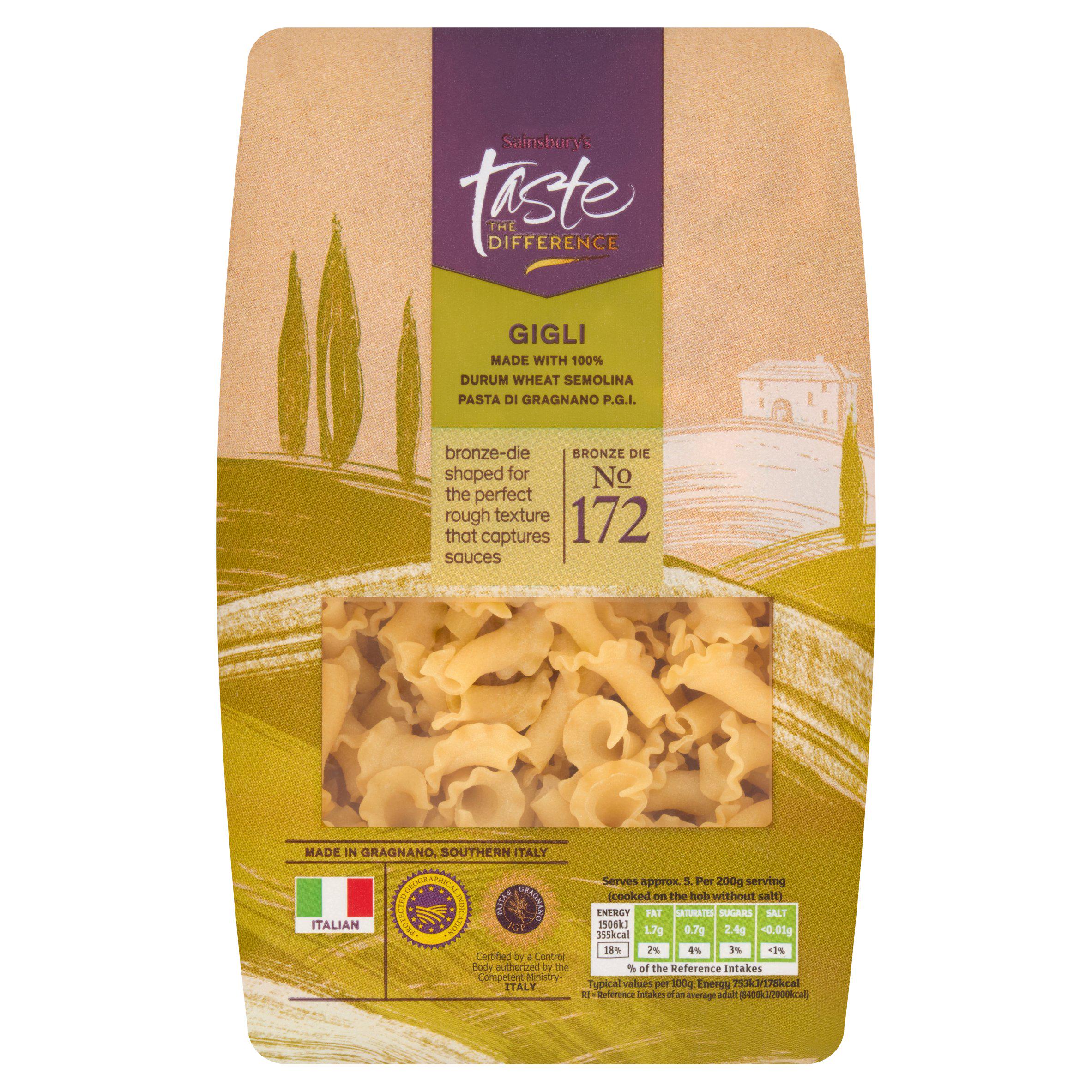
Where To Buy And How To Store Gigli Pasta
Gigli pasta is available at many Italian specialty stores and larger supermarkets. Some brands use the name campanelle, so check both names. You can also find it online from reputable sellers, and some gourmet shops offer whole wheat or organic versions.
For storage, keep Gigli in a cool, dry place in an airtight container. Properly stored, dried pasta can last up to two years.
If you try fresh handmade Gigli, use it within a few days and keep it refrigerated.
Cultural Background And Unique Qualities
Gigli pasta comes from Tuscany, a region known for its rustic and hearty food. The shape is inspired by the lily, which is a symbol of Florence, Tuscany’s capital. In Italy, Gigli is sometimes served during holidays or family gatherings because its appearance is festive and elegant.
The pasta’s structure, with ruffles and a cone, is a result of traditional hand-rolling methods. Today, machines make most dried Gigli, but some artisanal producers still shape it by hand. The handmade versions often have rougher surfaces, which hold even more sauce.
Trying Gigli is a way to experience a bit of Italian history and culture—right on your plate.
Frequently Asked Questions
What Sauces Pair Best With Gigli Pasta?
Gigli pasta works well with a wide range of sauces, but it is especially good with creamy sauces (like Alfredo), chunky tomato sauces, hearty meat ragù, and vegetable-based sauces. The ruffled edges and hollow center help it trap both thin and thick sauces for maximum flavor.
Does Gigli Pasta Taste Different From Other Pasta?
While all pasta made from semolina has a similar base flavor, Gigli’s slightly nutty and sweet notes can stand out if you use high-quality flour. Its real difference is in texture and how it holds sauce, not a strong flavor difference.
Is Gigli Pasta Gluten-free?
Traditional Gigli pasta is made from durum wheat, so it is not gluten-free. However, some specialty brands offer gluten-free Gigli using rice, corn, or quinoa flour. Always check the packaging if you have gluten sensitivity.
Can I Use Gigli Pasta In Baked Dishes?
Yes, Gigli is excellent in baked pasta recipes. Its shape traps sauce and cheese, making every serving rich and satisfying. Just be sure not to overcook before baking, as it will cook further in the oven.
Where Can I Learn More About Different Pasta Shapes?
For more details about Italian pasta varieties, you can visit the Wikipedia page on pasta, which has a comprehensive list and descriptions of pasta types.
If you’re looking for a pasta that offers both beauty and function, Gigli is a fantastic choice. Its flavor is mild and inviting, but the real joy is in the texture and sauce-holding power. Whether you’re preparing a simple weeknight meal or a special occasion dish, Gigli pasta is sure to impress both the eyes and the palate.
Give it a try and discover why this lesser-known shape deserves a spot in your kitchen.

